en
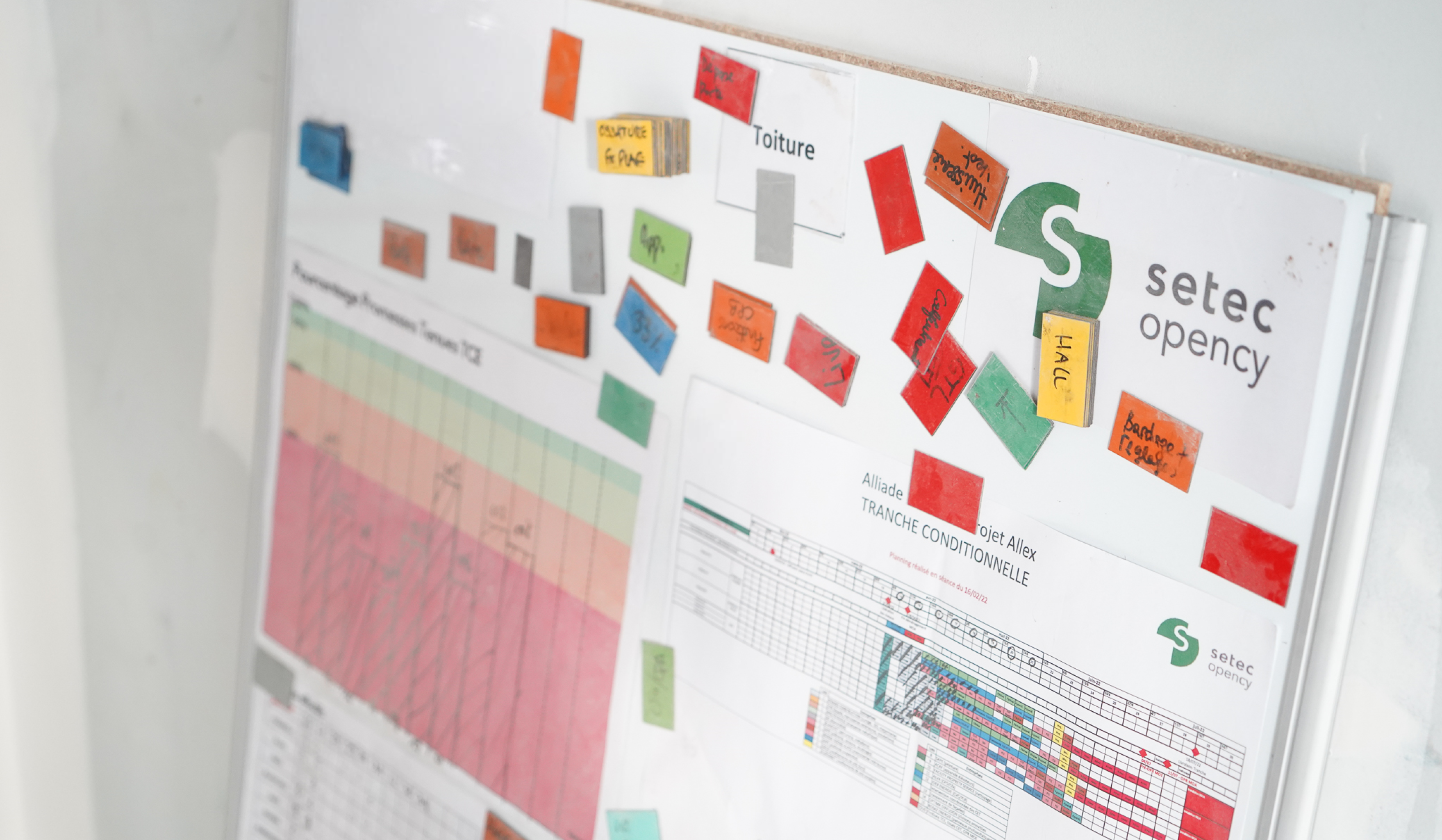
In a world where organisations must simultaneously improve their performance, reduce costs, speed up lead times, enhance the customer experience and safeguard their teams’ mental wellbeing (yes, all of that), developing a Lean transformation roadmap is no longer an option: it is a strategic imperative.
But be warned: a Lean roadmap is not merely a schedule of good intentions. It is a transformation architecture, based on flows, facts, customer needs and the reality on the ground. And above all: it must work across all sectors because flows and problems themselves know neither boundaries nor silos.
At setec opency and setec CH, we have been supporting manufacturers, service companies and public organisations for several years in the design and roll-out of Lean roadmaps. One consistent theme emerges from this work: successful transformations are not those that launch the most projects, but those that build a coherent vision, aligned with flows, customer expectations and business challenges, and which tackle the real problems together with the teams.
Diagnosis: looking at the system, not just the symptoms
Before implementing change, we must understand. A thorough Lean assessment is not limited to a compliance audit. It begins with a deep dive into physical, digital and decision-making flows to understand how the business really operates.
An assessment must ‘objectively analyse the initial situation’ and ‘raise awareness amongst all teams, including management’.
In practical terms, this involves :
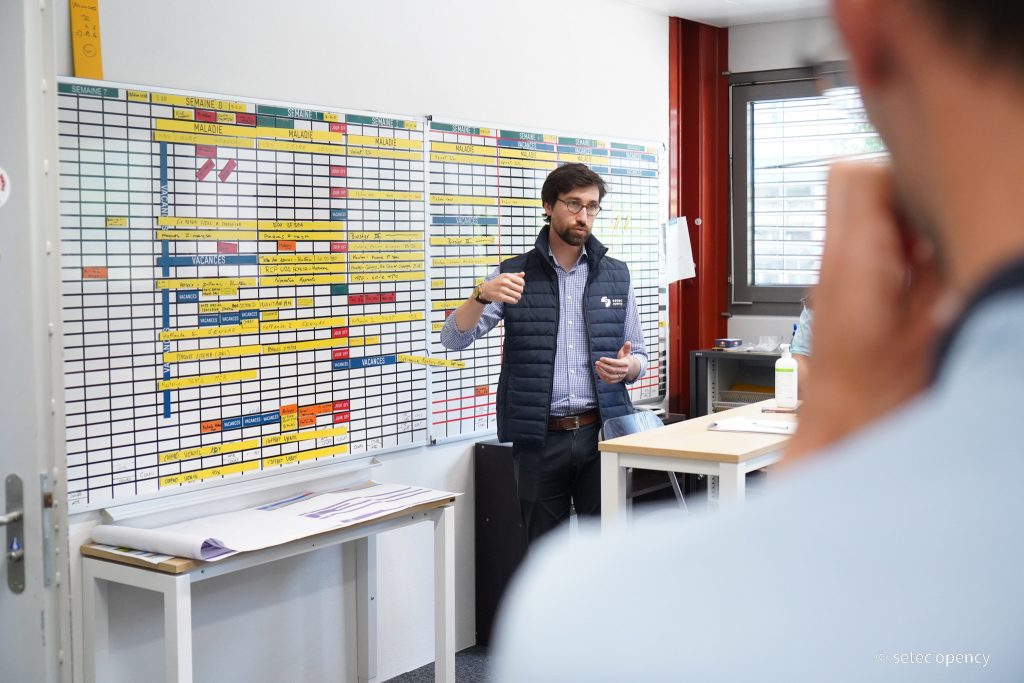
Flow analysis: visualising how materials, data, requests and decisions flow. Identifying expectations, quality issues, delays, bottlenecks, lack of flexibility and workarounds. In short, viewing the system as a whole rather than just a high-volume product (high runner) or a specific process.
At one of our industrial clients, the flow analysis revealed that nearly 63 per cent of the lead time was due to delays between process stages rather than the processing time itself. The roadmap developed with the teams enabled us to prioritise the actions with the greatest impact on lead times, stock levels and productivity. In less than twelve months, the company significantly reduced its lead time whilst accommodating its growth without any major investment in production capacity.
This result was not achieved through a succession of Lean tools, but through a shared understanding of the flow and the prioritisation of Kaizen initiatives.
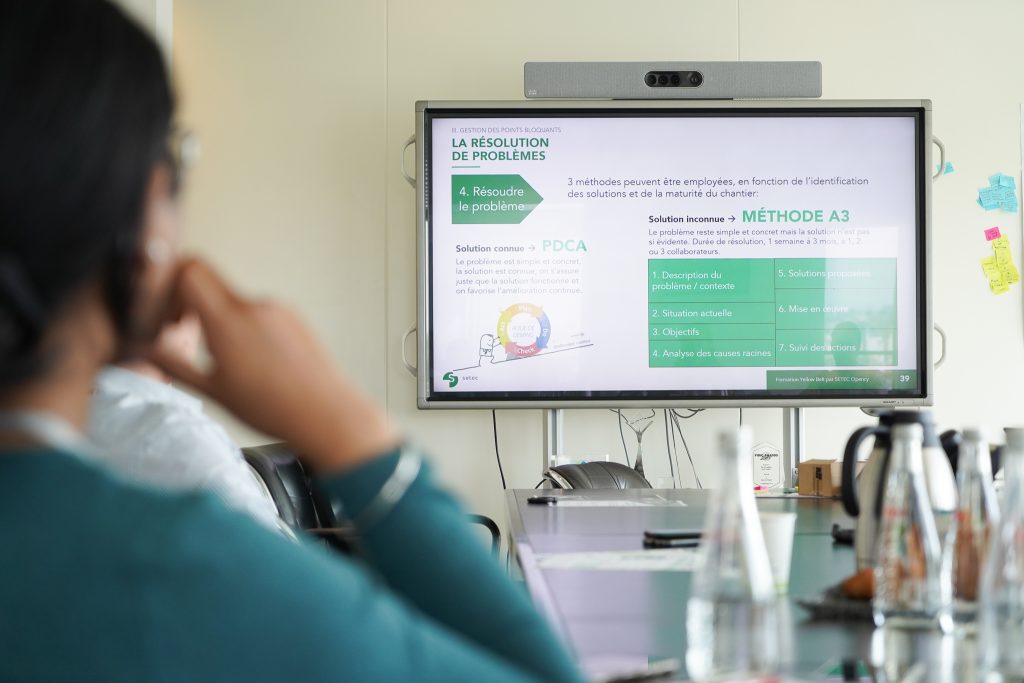
The voice of the customer, the compass for transformation :
A Lean transformation only makes sense if it meets what the customer really wants. And above all: what they are not willing to pay for. Value-added activities that the customer does not want are the first to be eliminated, not because it is ‘Lean’, but because it is common sense. What customer complains about being listened to and having their expectations met?
Strategic vision, the second compass :
Without a clear vision, the compass needle spins in circles and the company flits about like a weather vane at the slightest gust of wind. A Lean transformation requires a firm strategic course for the medium and long term. This clear and understandable direction provides the stability needed to avoid pushing Sisyphus’s boulder day in, day out. It is precisely this unwavering compass that then enables teams to remain agile, adjust their sails and innovate on the ground without ever losing their bearings. A Lean transformation requires a clear, stable and understandable direction.
Voices from the front line, the unfiltered reality :
Because a transformation disconnected from the front line is like a strategy without gravity: it floats, it shines… and it never touches the ground.
Building consensus: transformation begins when everyone is on the same page
Diagnosis is not merely a tool for analysis. It is a tool for mobilisation.
It must ‘broadly involve staff’ and enable ‘a consensus to be reached on the current situation’.
When everyone sees the same problems, transformation becomes possible. When everyone sees different problems, transformation becomes… a family row… that’s only human.
Let’s talk about leadership: without sponsorship, there can be no transformation
You can have the best diagnosis, the finest roadmap, the most clearly mapped processes… But if senior management does not support, commit to or drive the transformation, then Lean becomes a nice, interesting project… as if Lean management could come to a halt or rely on just one person.
Changing things on your own? Good luck with that.
For the transformation to succeed, you need :
- a clear commitment from leadership,
- a well-defined vision,
- a visible presence on the ground,
- consistency between words and decisions,
- the ability to support teams during periods of change,
- support, training, and opportunities for practice and learning.
A Lean transformation is a complex undertaking: it affects behaviours, routines, decisions, workflows and interactions. It follows the classic dynamics of change: awareness, mobilisation, experimentation, structuring and embedding.
And yes: there always comes a point when the organisation wonders whether ‘all this is really worth it’. That’s normal. It’s even a sign that the transformation is moving forward, causing a bit of a stir and causing some friction.
Linking Lean to financial and business challenges
(Lean promotes innovation and autonomy… but every company also talks about the business case.)
A Lean roadmap must also speak the language of the finance department. Not just for show, but to be credible, impactful and motivating.
Typical financial objectives :
- reduction in stock levels,
- reduction in non-quality costs,
- improved profitability of operations,
- securing margins,
- ability to accommodate growth without incurring additional costs.
- Facilitating the integration of new talent
Lean is not an optimisation project. It is about creating value for (external) customers and for the (internal) management system.
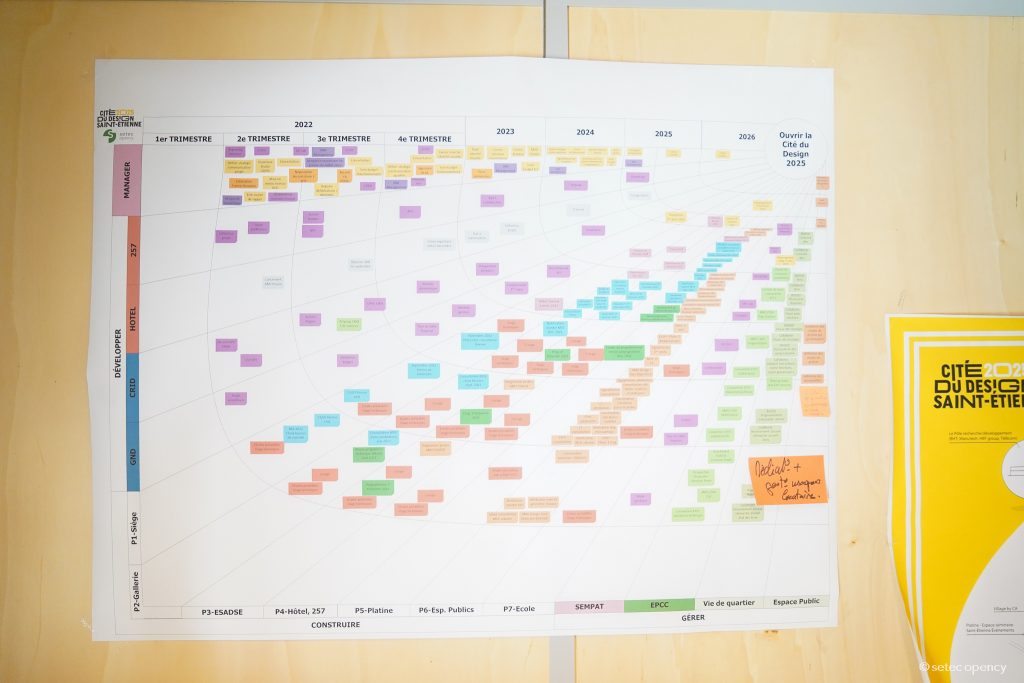
The Lean Roadmap: three horizons, one direction
Phase 1 Quick Wins – Solving problems (0–3 months) :
Actions that demonstrate that “yes, it works”.
Objective: to build trust, momentum and a touch of operational magic.
Phase 2 Operational Programme (3–18 months) :
Structural initiatives: workflows, visual management, standards, monitoring routines, skills development, quality at source and an alert system. This is the heart of the transformation.
Phase 3 System transformation (18–36 months) :
Align strategy, organisation and workflows. Establish a sustainable culture of continuous improvement. Ensure that Lean is no longer just a project… but a way of working.
A multi-sector approach: because these flows exist everywhere
Manufacturing? Physical flows. Services? Information flows. Healthcare? Patient flows. Tech? Data flows. Retail, transport, etc.
Lean does not apply to a single department or sector. It applies to a system.
Conclusion: a Lean roadmap is all about flows, customers… and people.
A successful Lean roadmap is :
- an analysis of a stable system,
- a shared vision,
- strong executive sponsorship,
- a clear financial rationale,
- a detailed understanding of customer needs,
- a reduction in unwanted added value,
- a long-term structure,
- collective commitment,
- sustainable transformation.
And if we can add a bit of fun to the journey of discovery, testing, improvement and cross-team collaboration, so much the better. Because an organisation that enjoys itself… is an organisation that thrives. And an organisation that thrives… is an organisation that moves forward.
For further