en

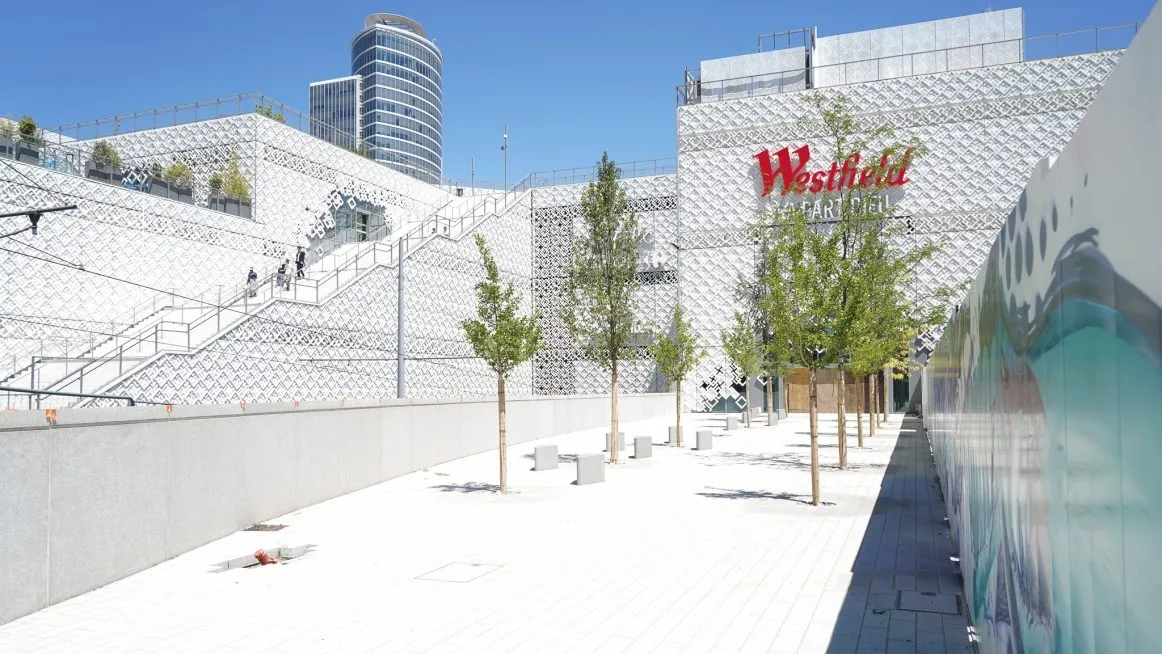
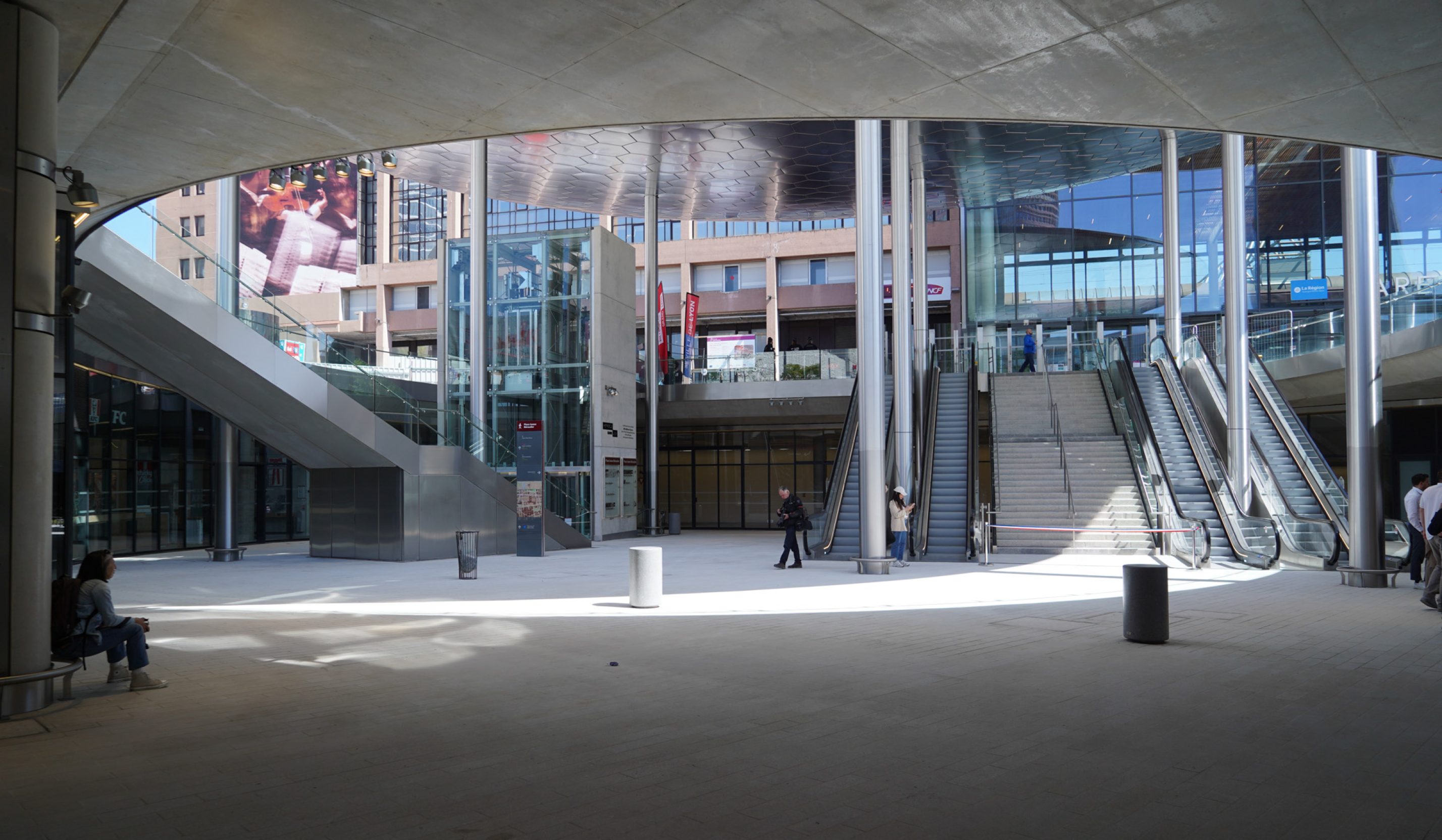
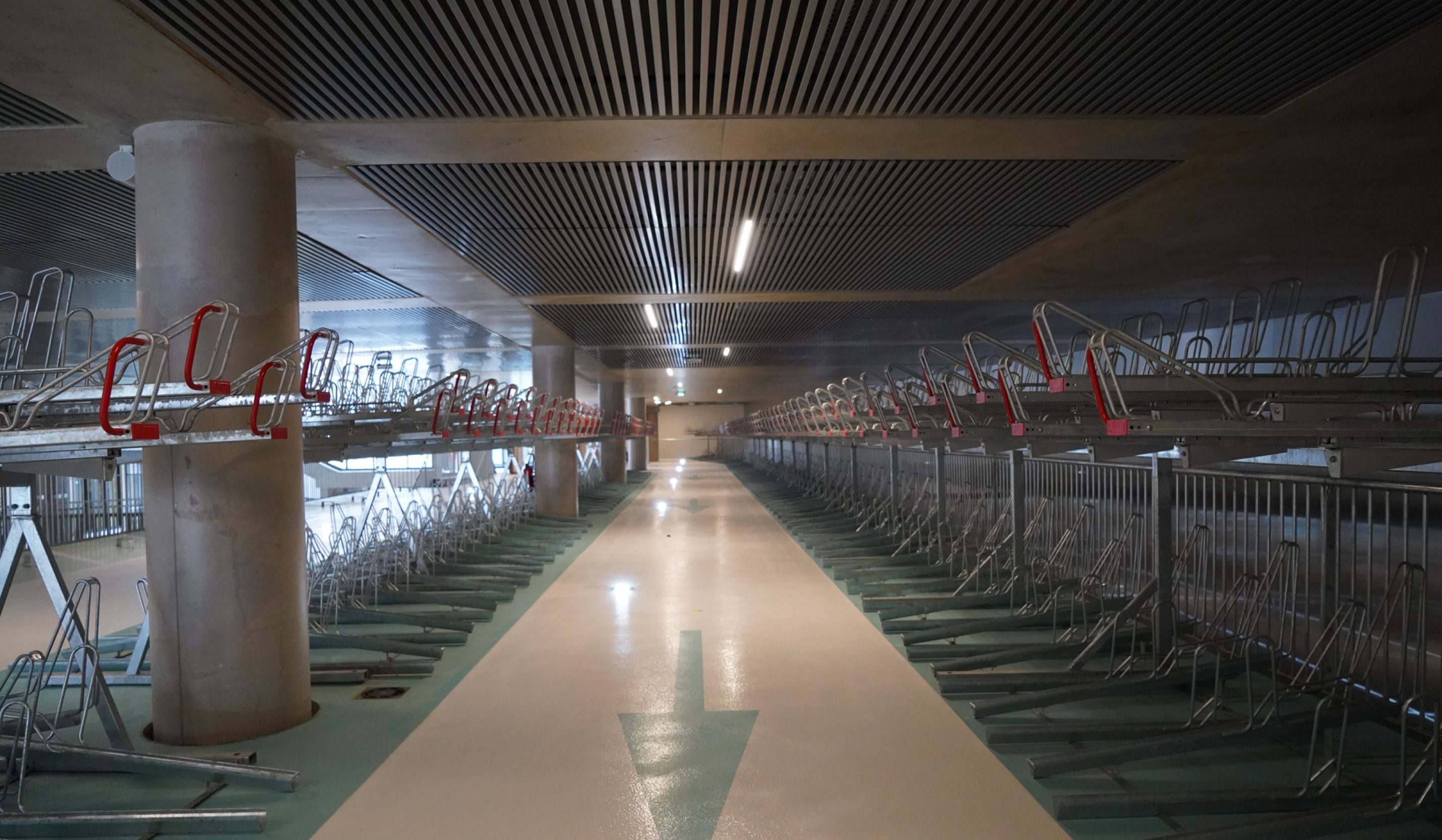
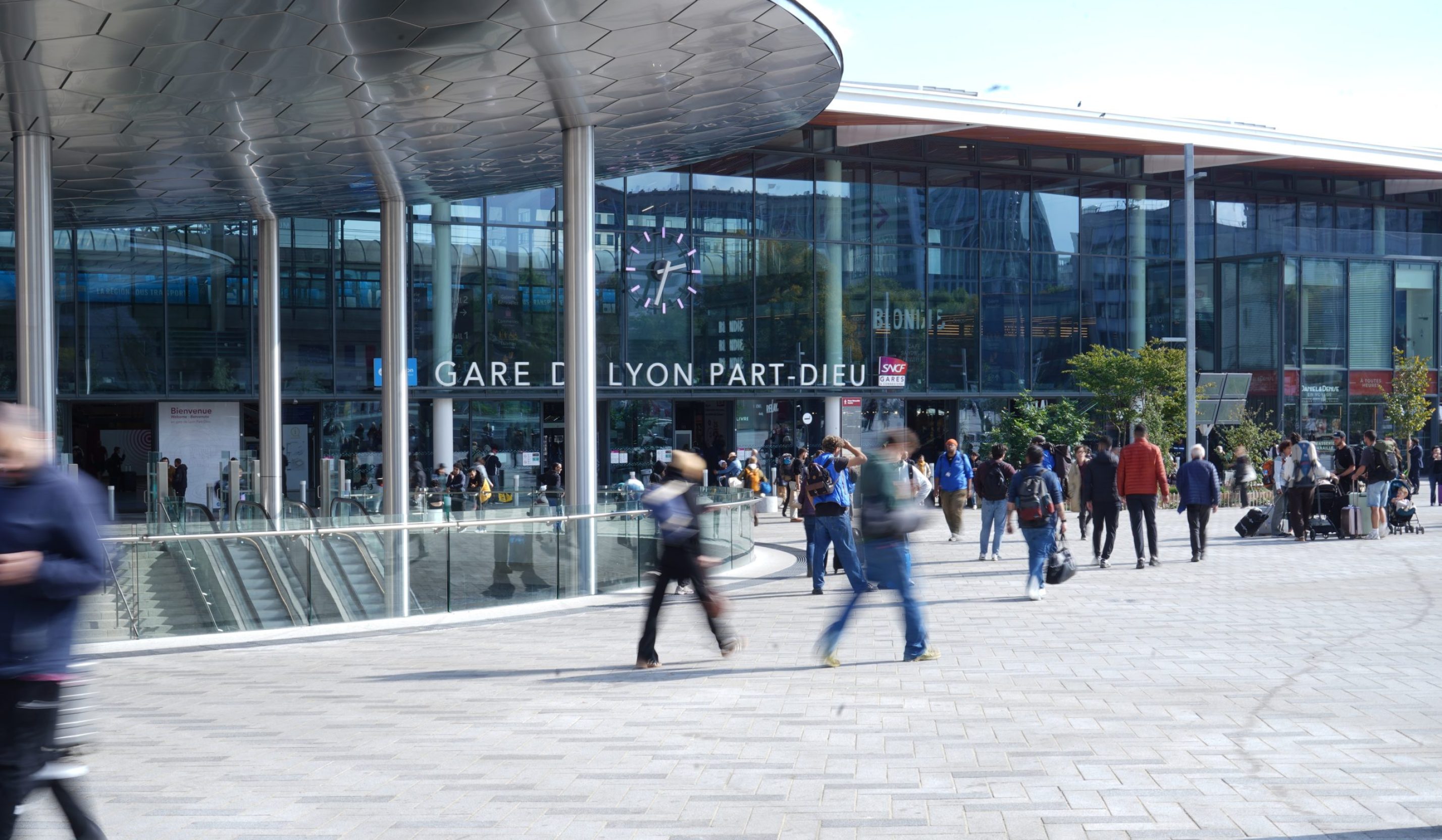
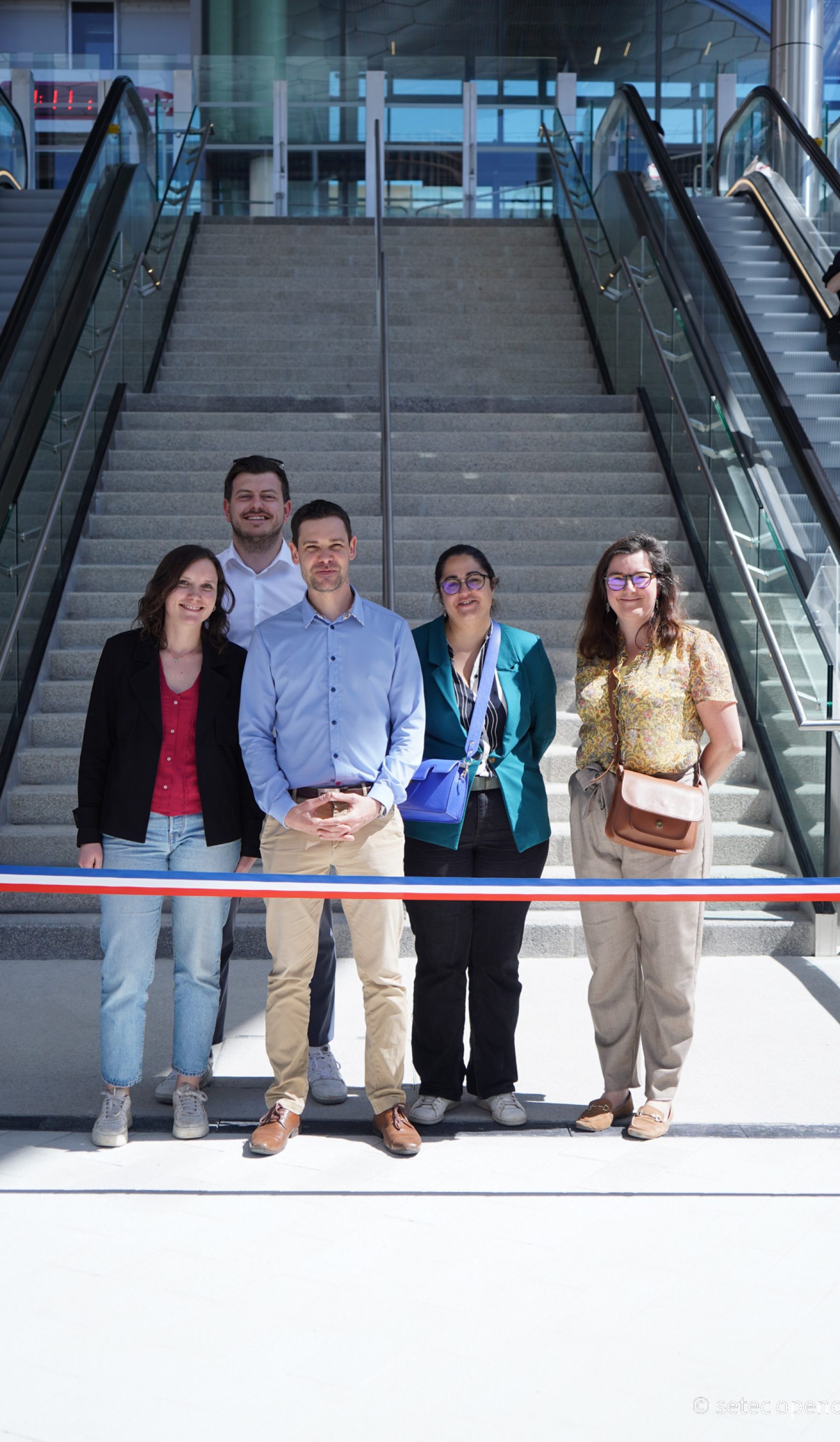
The recent reopening of the new Place Béraudier marked a key milestone in the transformation of the Lyon Part-Dieu Multimodal Exchange Hub (PEM). Completely redesigned, this broad, ground-level forecourt enhances clarity, offers more greenery, and provides modernized access to the station, complemented by a 1,500-space underground bike station. This major development illustrates the scale of the broader project to transform the Part-Dieu station district into a true multimodal hub and provides an opportunity to reflect on nearly ten years of setec opency’s involvement alongside SPL Lyon Part-Dieu.
From the earliest design stages to final construction phases, setec opency supported the PEM development through scheduling, site-wide coordination (inter-site OPC), Lean Management, and logistics & site setup missions. Its role was essential in structuring interfaces, securing milestones, and coordinating daily operations among public, private, and concession stakeholders in a dense and constrained urban setting.
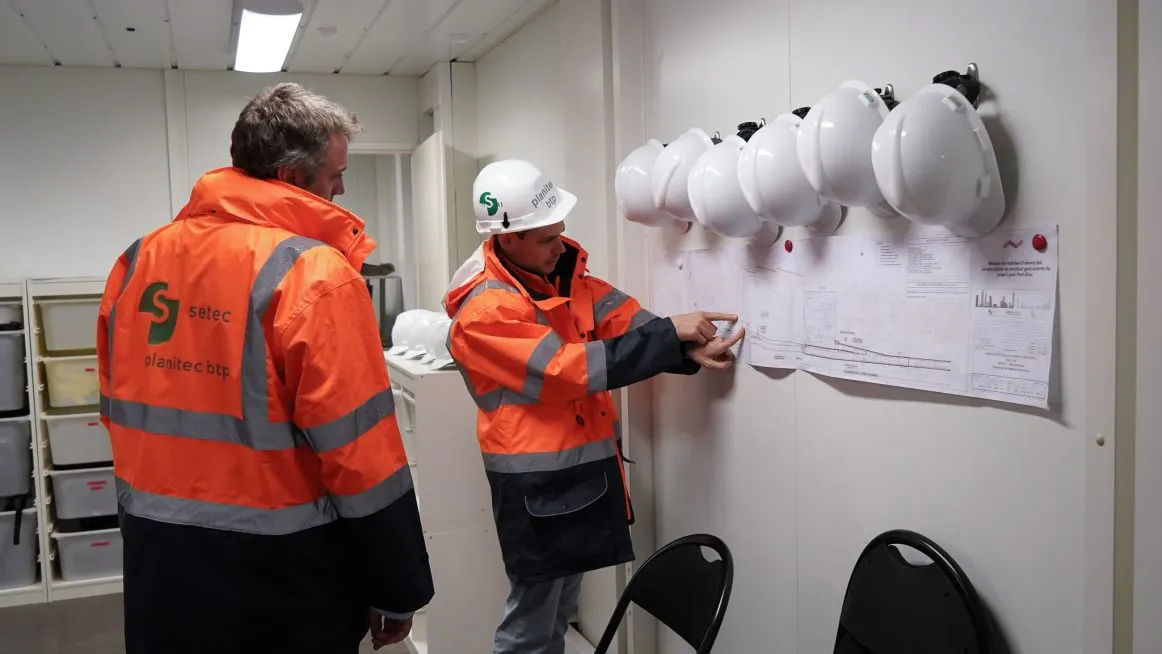
1. Design & Construction OPC: managing a district in transformation, from studies to project delivery
The scope entrusted to setec opency covered a series of underground infrastructures and surface developments among the most strategic components of the project. The teams delivered OPC services for the Vivier Merle Tunnel (TVM), the Bonnel Exit (SBO), the Brotteaux-Servient Exit (SBS), the new metro access (MET), the Lower Plaza (Place Basse – PBA), and the Technical Concession Gallery (GT). These works were complemented by several major public spaces: Vivier Merle Boulevard between Lafayette and Paul Bert streets, Georges Pompidou Avenue, Servient Street, and the Upper Charles Béraudier Plaza. This dense and highly interfaced scope required rigorous management, detailed planning, and constant coordination among all stakeholders involved.
setec opency’s expertise was mobilized as early as the design phases, a key period during which the production and synchronization of studies conditioned the success of subsequent construction phases. The teams organized and scheduled the production of studies carried out by numerous contributors, precisely identifying required input data, structuring information circulation and validation processes, and ensuring compliance with deadlines. This study management approach helped limit inconsistencies, anticipate critical interfaces, and secure the transition to construction. During the construction phase, setec opency ensured a continuous on-site presence to monitor schedules, coordinate contractors, and manage the risks inherent to complex urban worksites. This operational leadership, supported by strong anticipation capabilities and proven experience in major projects, made it possible to maintain robust production momentum despite high technical, urban, and logistical constraints.
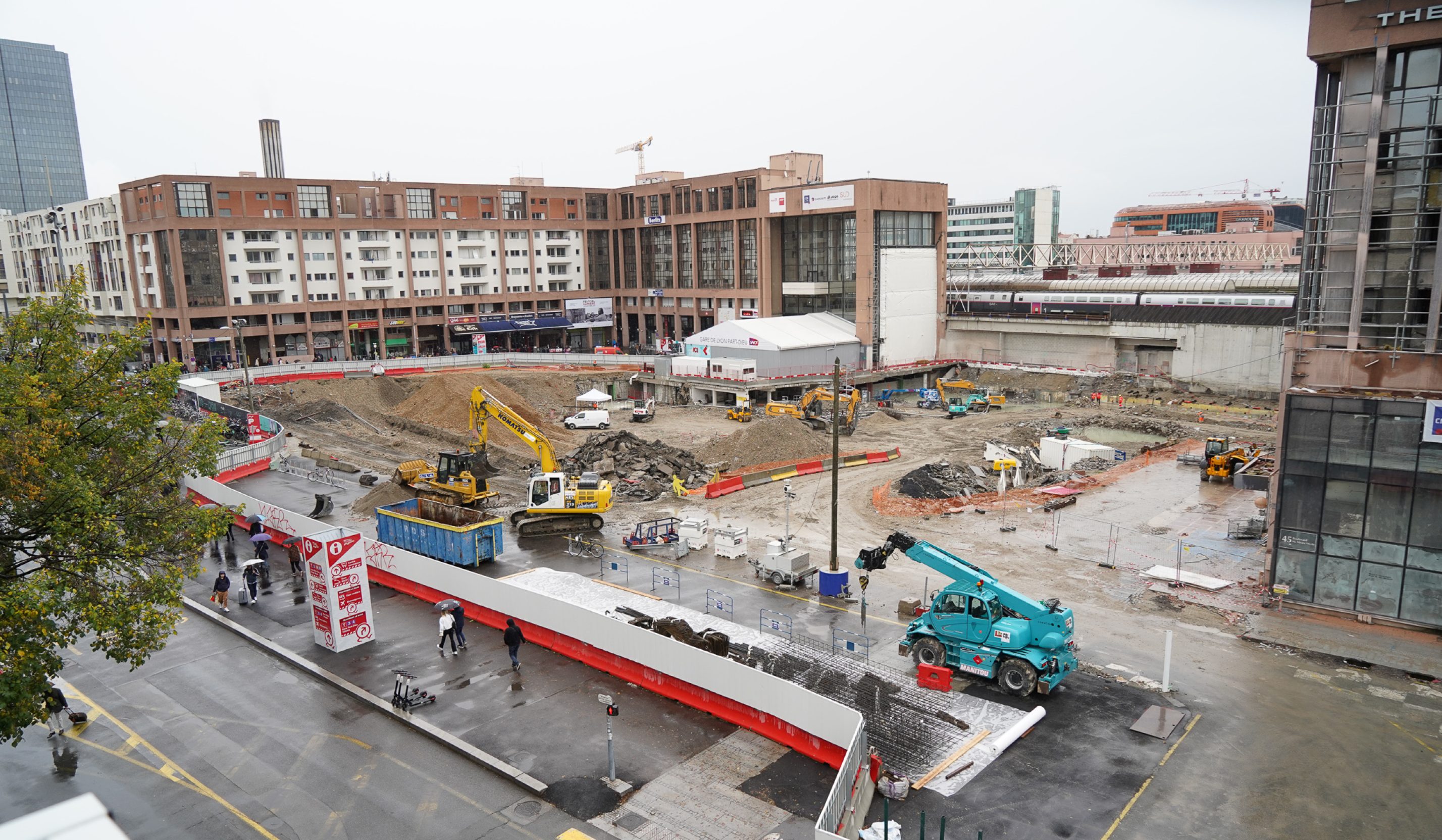
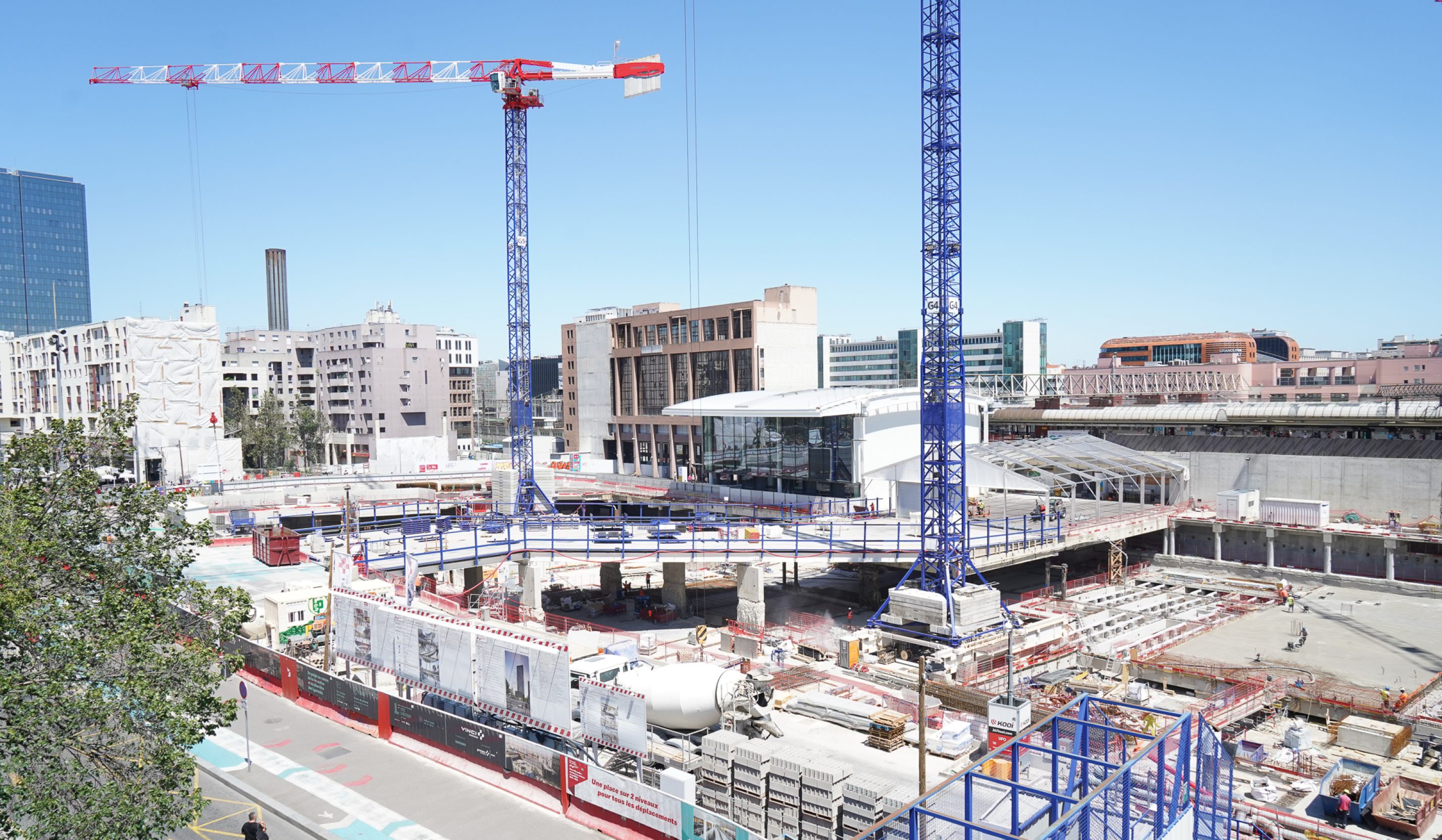
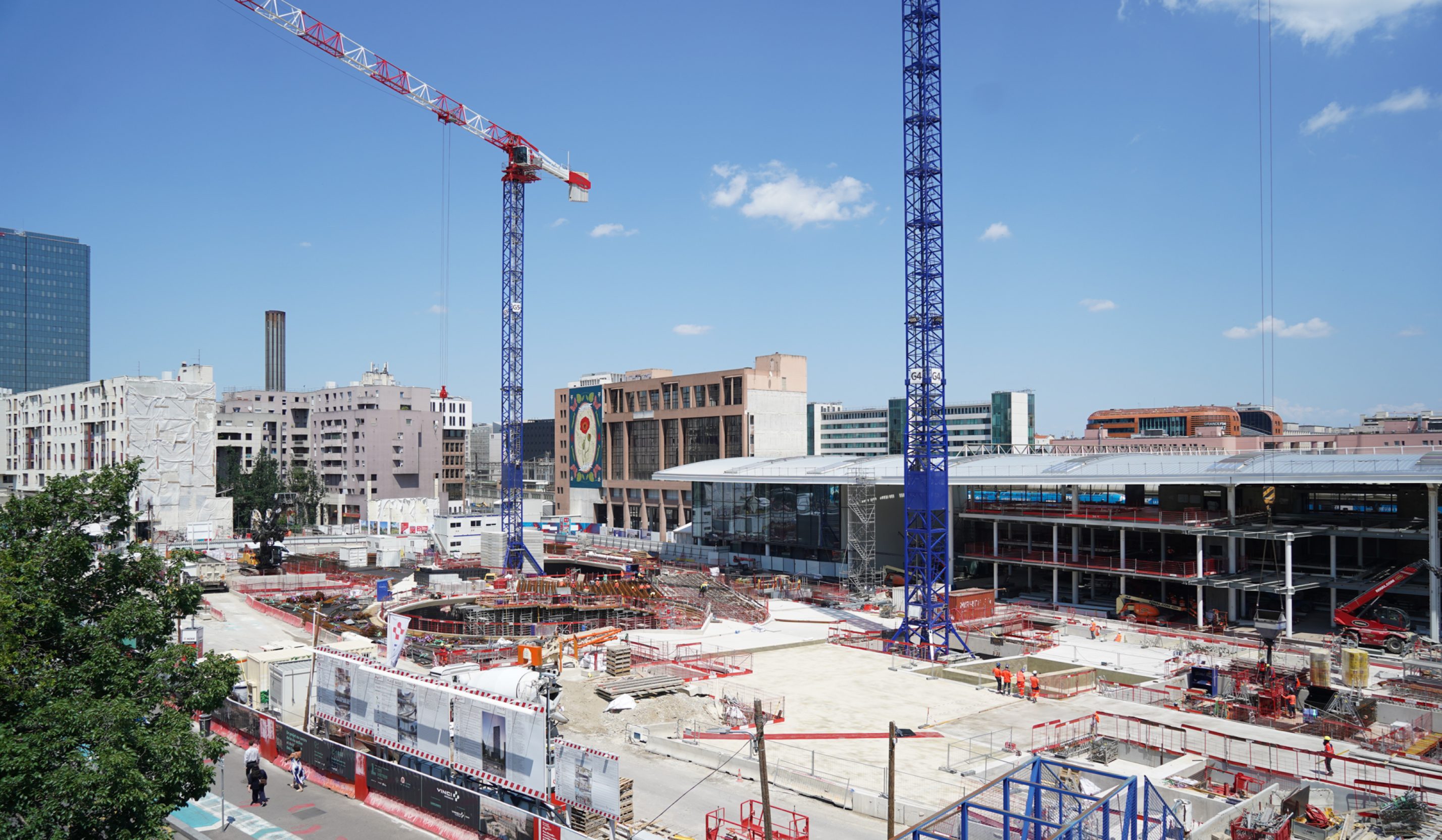
2. Design & Construction OPC: focus on managed operations and visual feedback
The site facilities
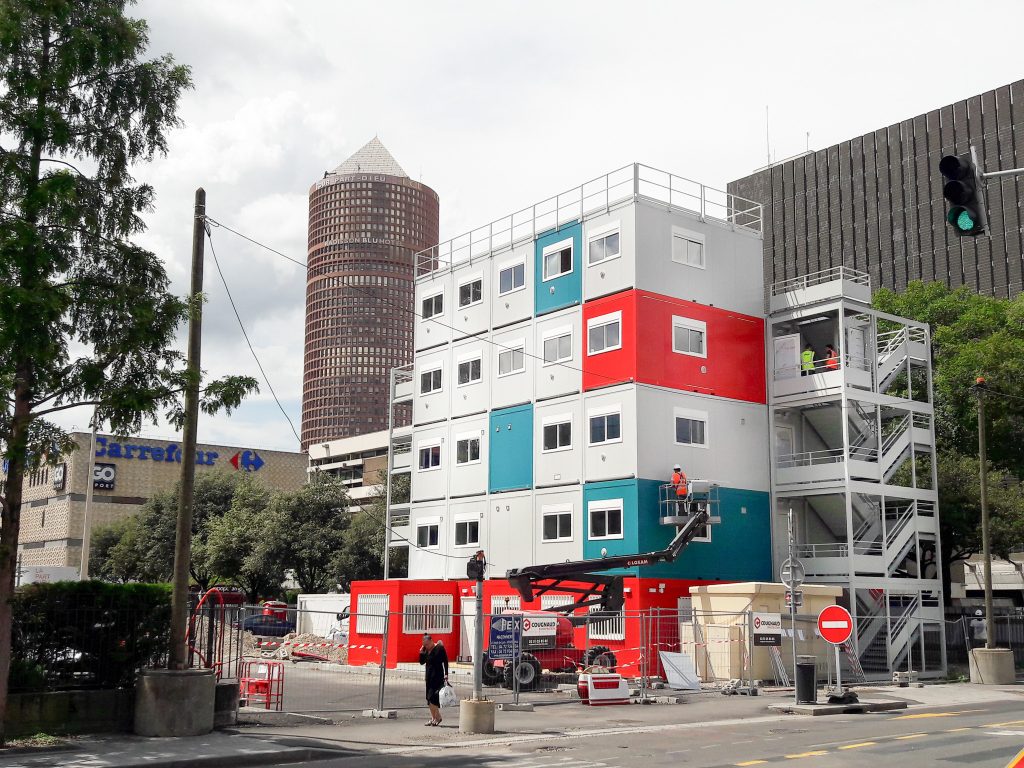
setec opency’s mission began in 2017 with the installation of the shared site facilities on Rue Bouchut for SPL Lyon Part-Dieu and the launch of works on the Vivier Merle Tunnel (TVM). This site facility, comprising 53 modular units arranged over four levels and located at the heart of the PEM, represented a major challenge for SPL, as it was intended to accommodate all construction teams involved in SPL-led projects throughout the duration of the operations.
Note: the management of the site facilities is detailed in Chapter 5, “Site facilities management: establishing production conditions for a complex urban project”.
The Vivier Merle Tunnel
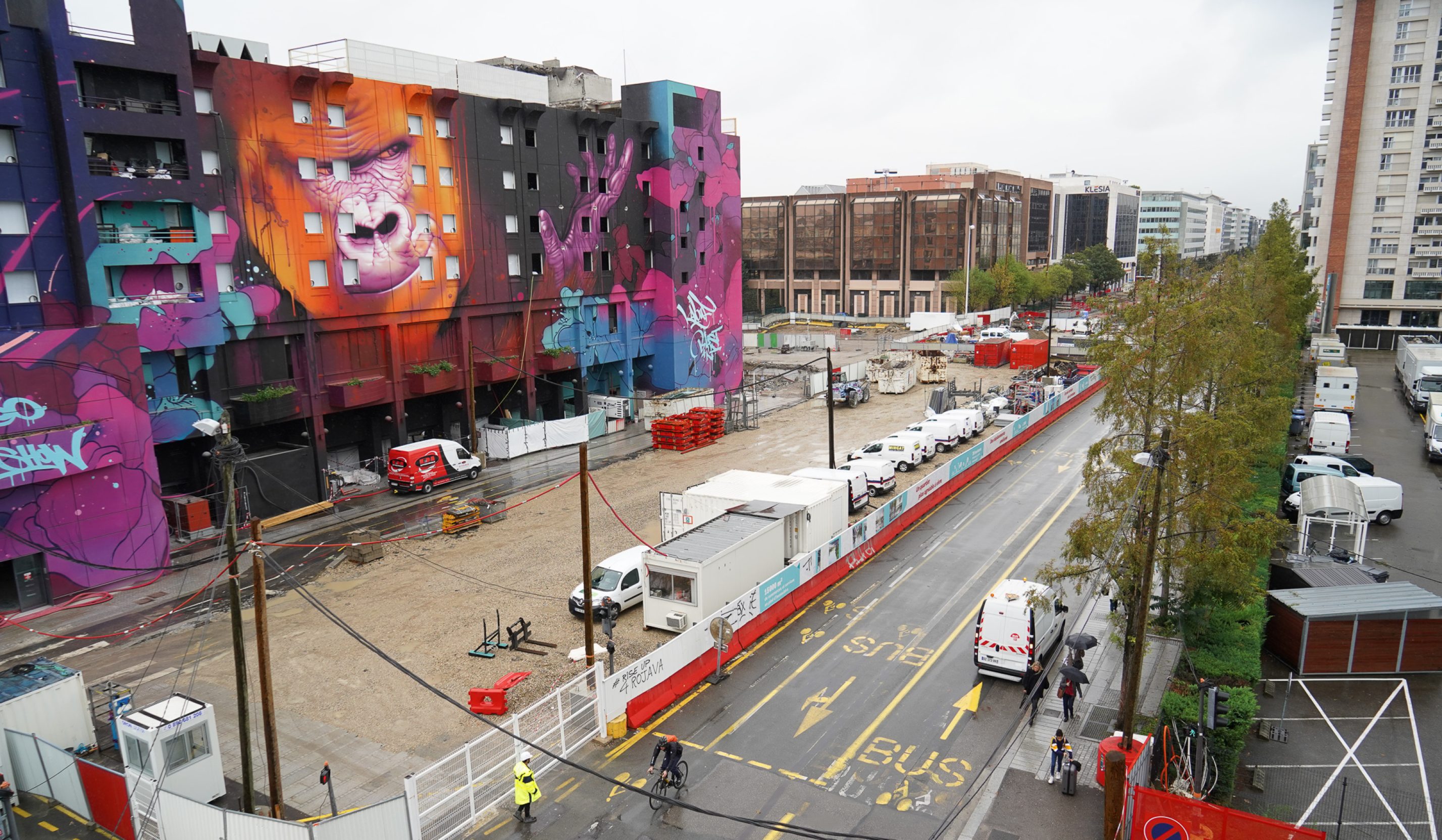
The existing Vivier Merle Tunnel was extended by 120 meters to free the Marius Vivier Merle Boulevard between Paul Bert and Lafayette streets from vehicular traffic, in favor of public transport, soft mobility modes, and pedestrians. The works lasted 20 months and the tunnel was inaugurated in February 2020. In early 2020, this was followed by the launch of public space works along Vivier Merle Boulevard and the construction of the Bonnel Exit (now serving taxis and logistics activities for the station and the To Lyon tower at the Lower Plaza level).
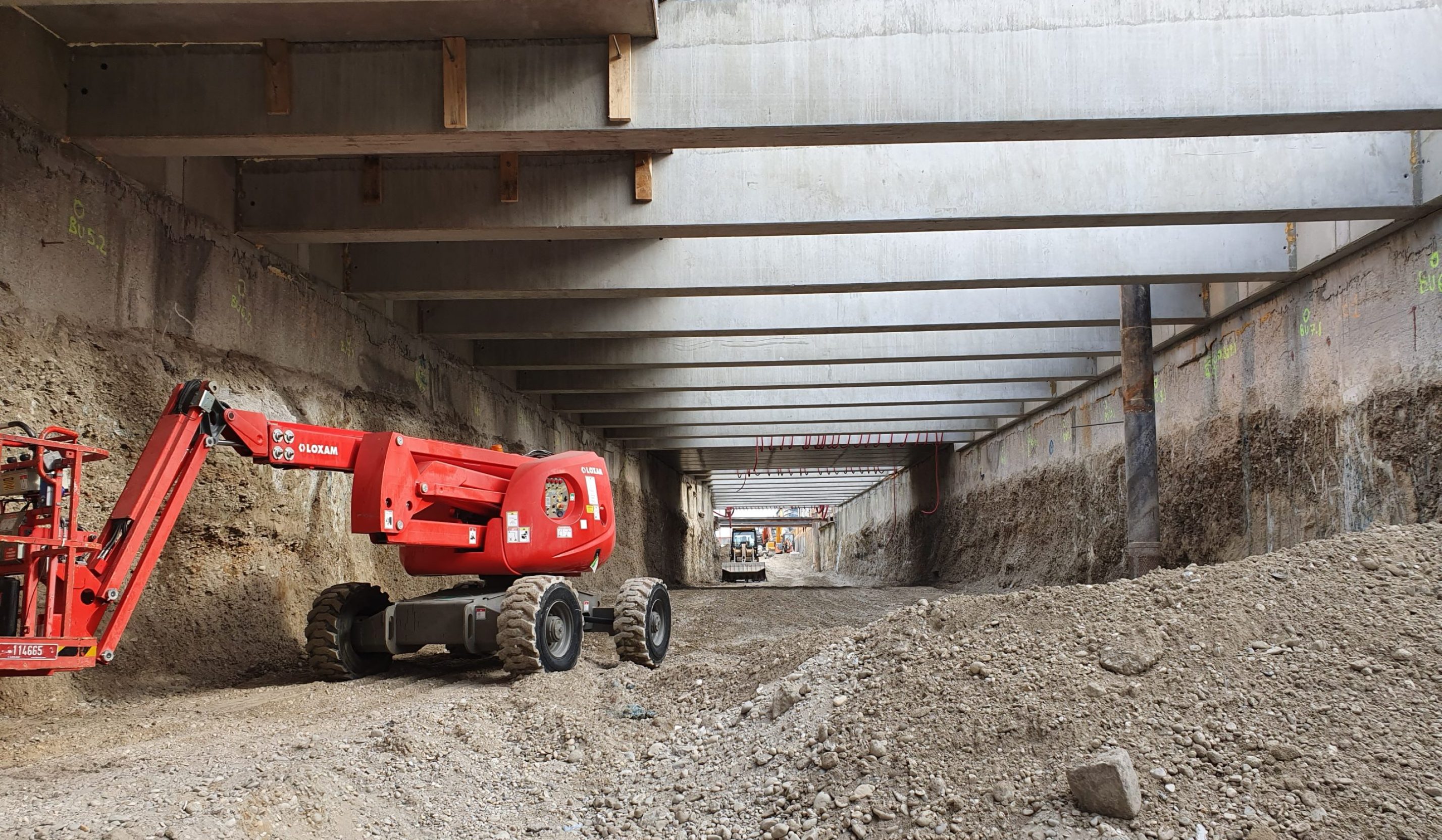
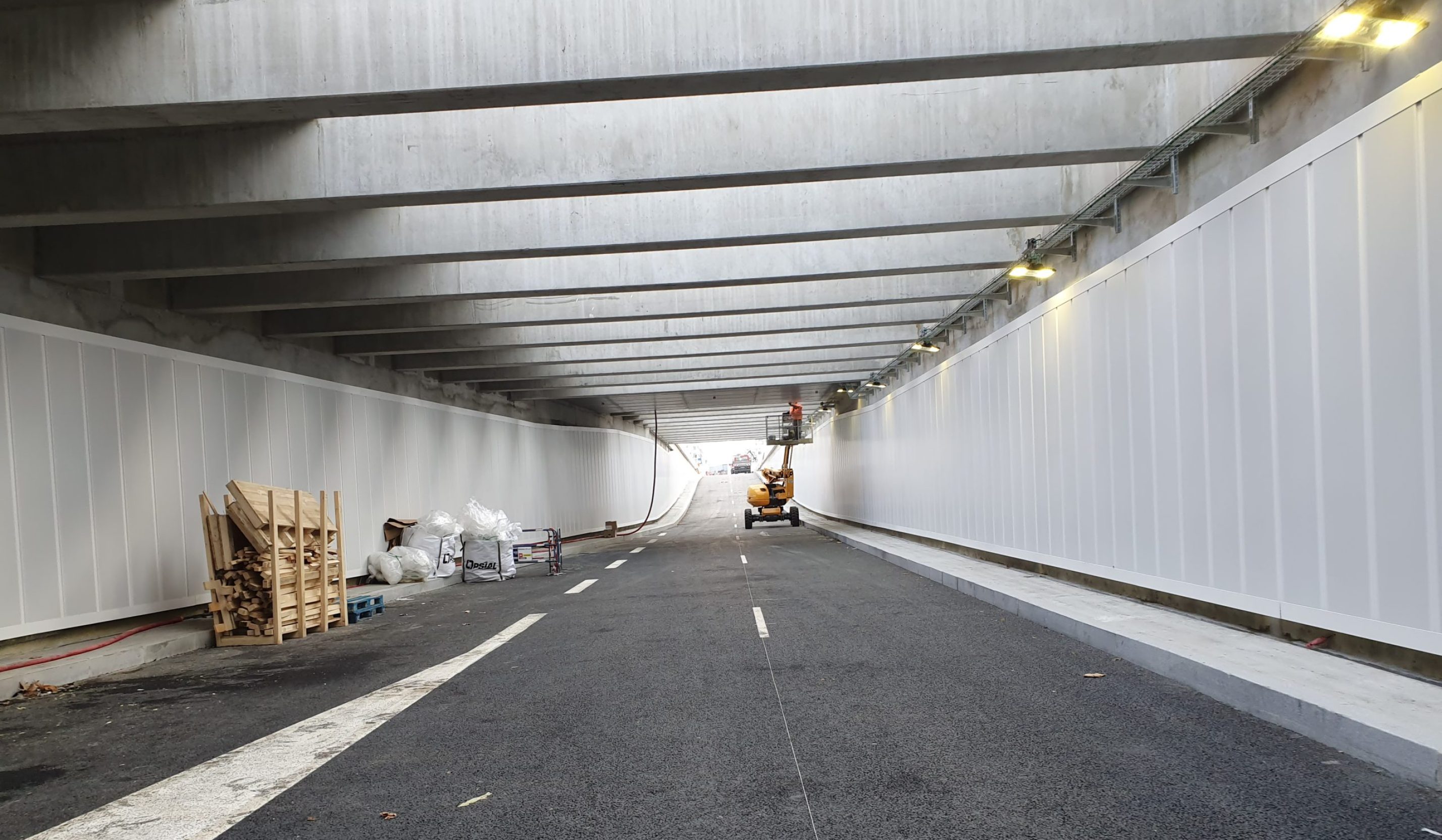
Vivier Merle Boulevard
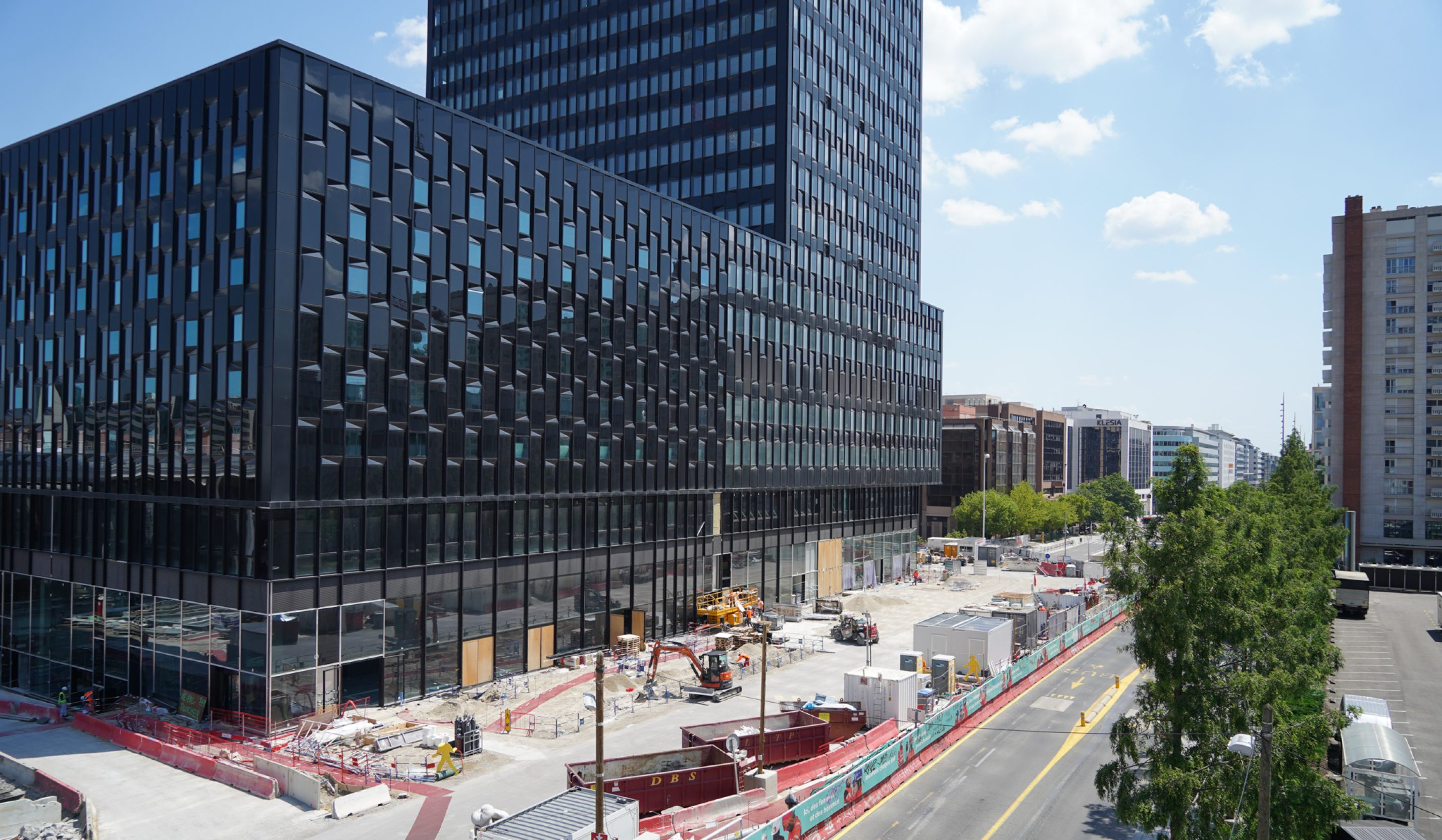
Marius Vivier Merle Boulevard was fully redeveloped over a 750-meter stretch between Paul Bert and Lafayette streets, using sector-based sequencing and precise phasing to address dense urban and inter-site constraints. Redevelopment began in late 2019 in the south-east section and was completed at the end of 2025 in front of the François Mitterrand Library.
Georges Pompidou Avenue
Georges Pompidou Avenue and Servient Street, adjacent to the boulevard, were also redeveloped to improve neighborhood flows. Inaugurated in August 2024, Georges Pompidou Avenue—once open to private vehicles—is now dedicated exclusively to cycling traffic.
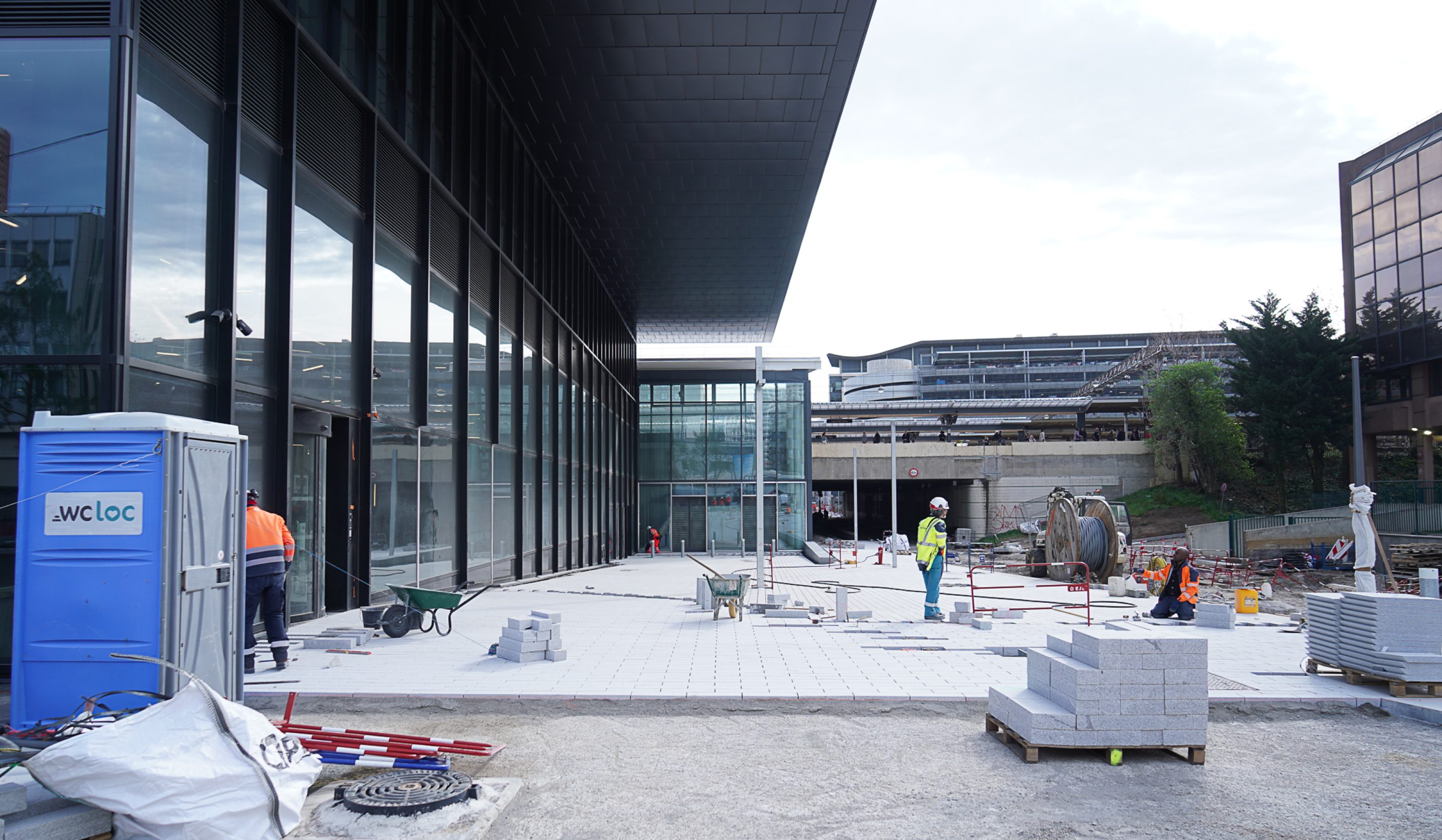
The Servient Mall
The Servient pedestrian mall provides an improved east-west crossing of the district through the La Part-Dieu shopping center.
The Bonnel Exit
The Bonnel Exit was an existing structure previously used as the former drop-off and taxi exit for the station. It was deepened and extended to accommodate larger vehicles, resulting in a total covered ramp length of 90 meters and an open ramp length of 60 meters. Its early construction aimed to improve logistics flows for the PEM works. Construction began in summer 2020 and was completed in early 2022.
The Brotteaux-Servient Exit
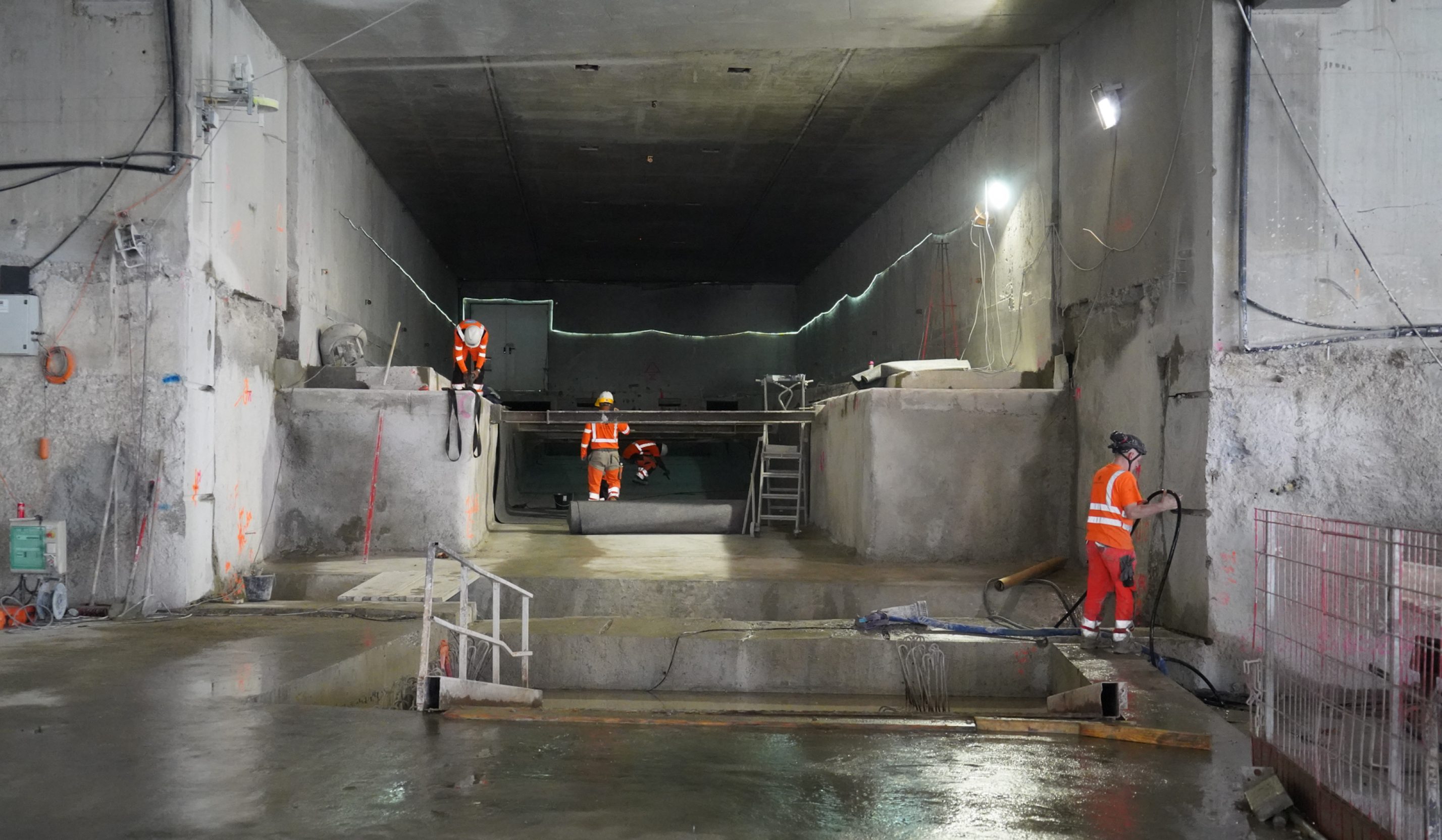
Launched in May 2020, the Brotteaux-Servient Exit (SBS)—a road tunnel serving as the vehicle exit from the Lower Plaza parking facility—was one of the most complex structures to build within the project. Located between the existing and operational Brotteaux-Servient Tunnel and level -2 of the station parking, it runs beneath the tramway and a major combined sewer network for the City of Lyon. Limited site installation areas and the construction techniques employed represented two major challenges. The structure was completed in early 2024, following more than 3.5 years of work, for a total length of 60 meters.
The new metro acces
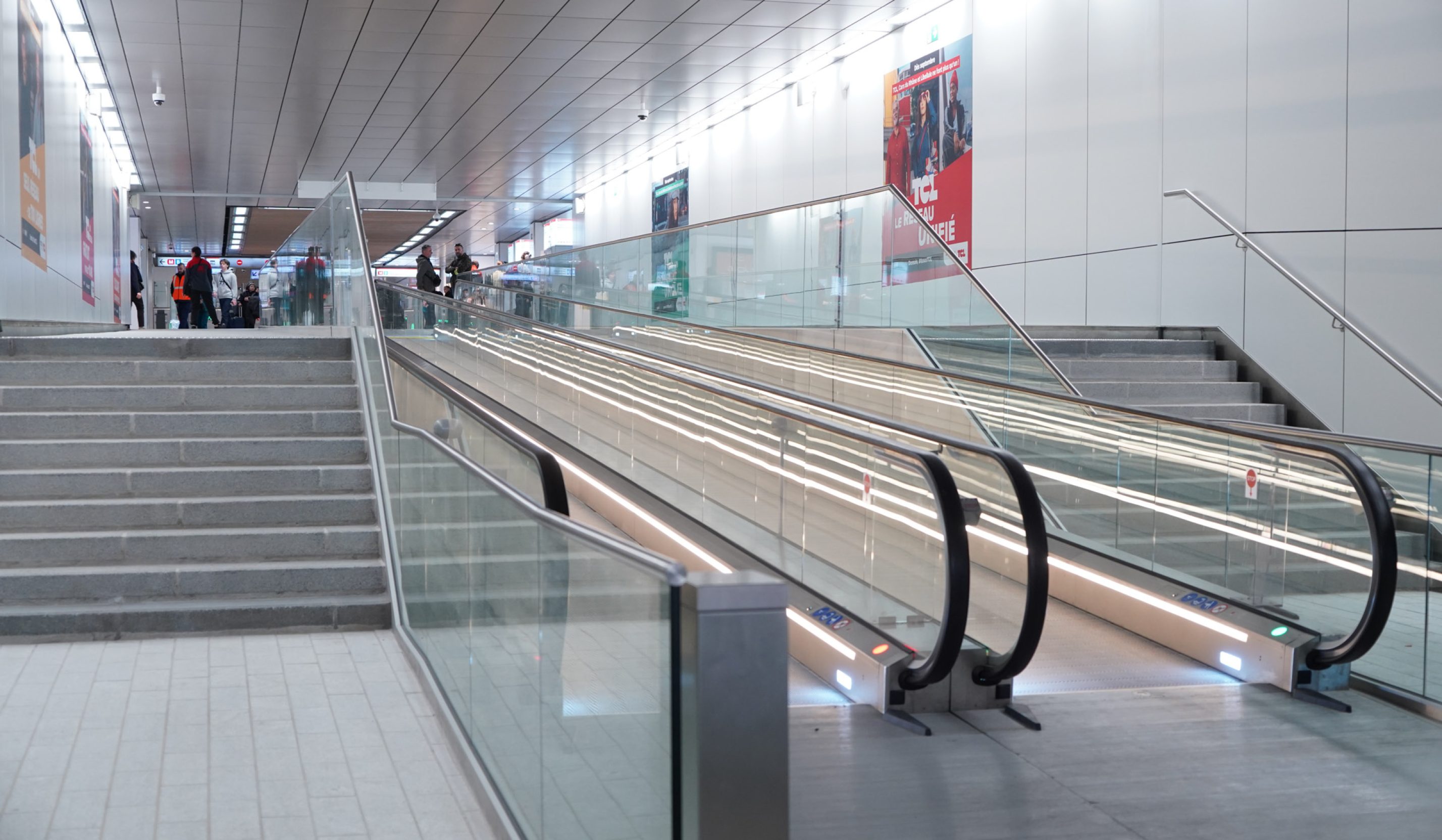
Construction of the new metro access from the station was carried out in parallel with the SBS works by the same contractor consortium. This existing structure was also deepened to accommodate two moving walkways, improving train-to-metro connectivity from the Lower Plaza.
Concession networks in the technical gallery (To Lyon, Station and Lower Plaza)
As an extension of these major structures, setec opency also managed the deployment of concessionaire networks within the technical gallery serving the To Lyon building, the station, and the Lower Plaza. This intervention involved several major concessionaires, including DALKIA for district heating and cooling networks, ENEDIS for electricity, and Orange for telecommunications. Carried out from January 2022 to mid-2024, these works took place in a highly constrained space, requiring fine coordination and precise phasing closely aligned with civil engineering progress. Progressive commissioning of the networks required constant anticipation of interfaces to ensure operational continuity and compatibility between technical systems.
The Lower Plaza (Place Basse)
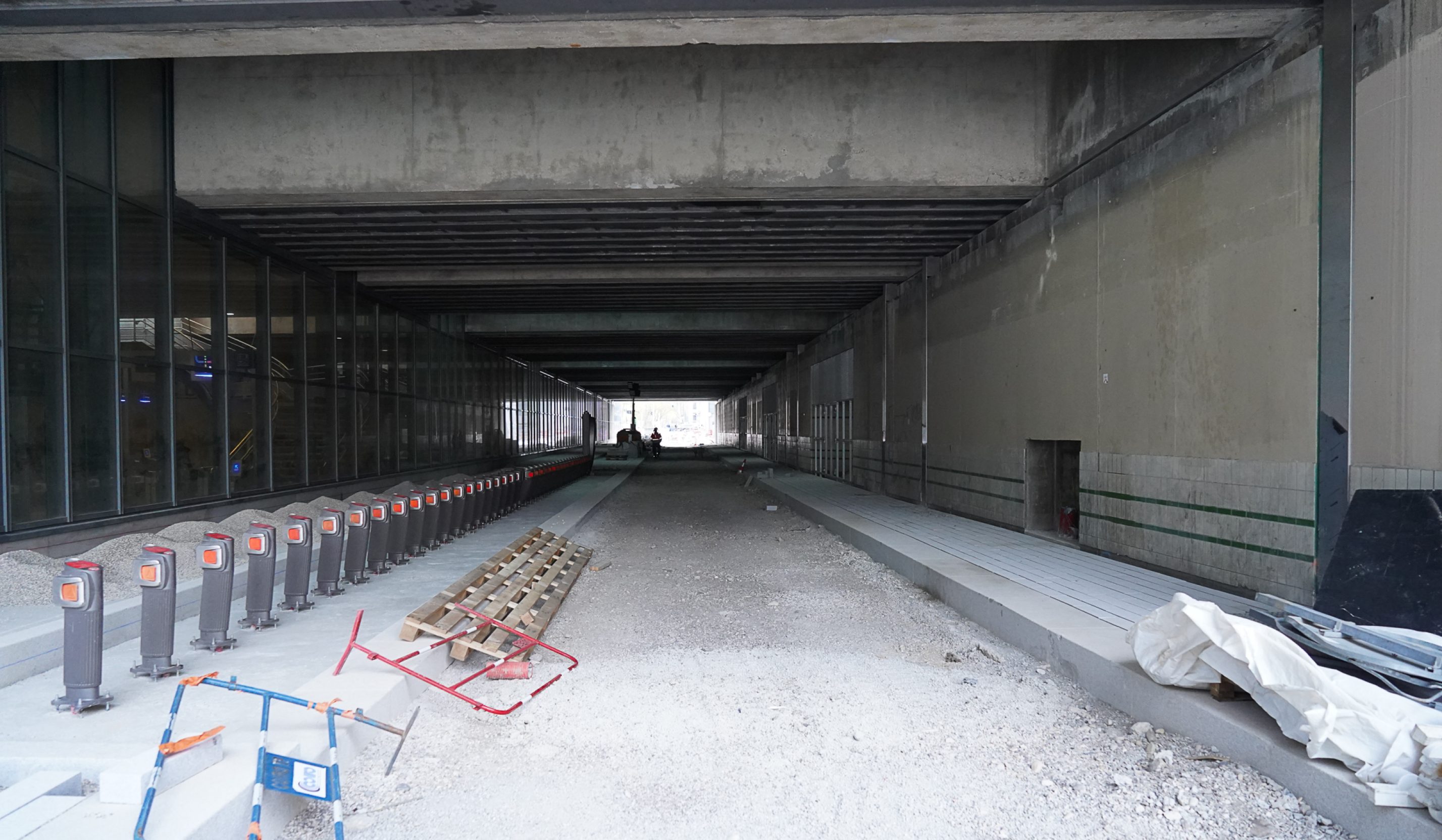
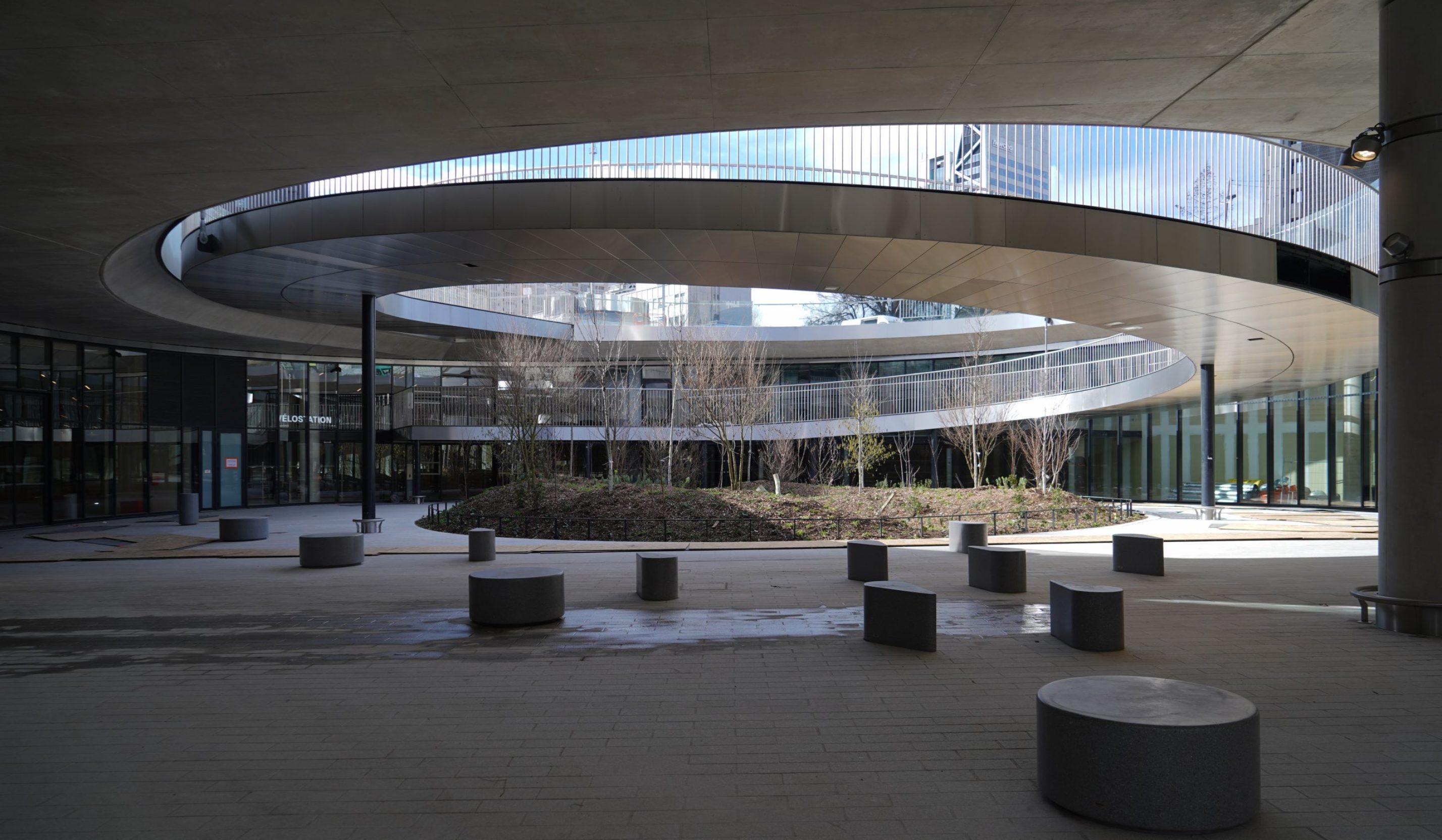
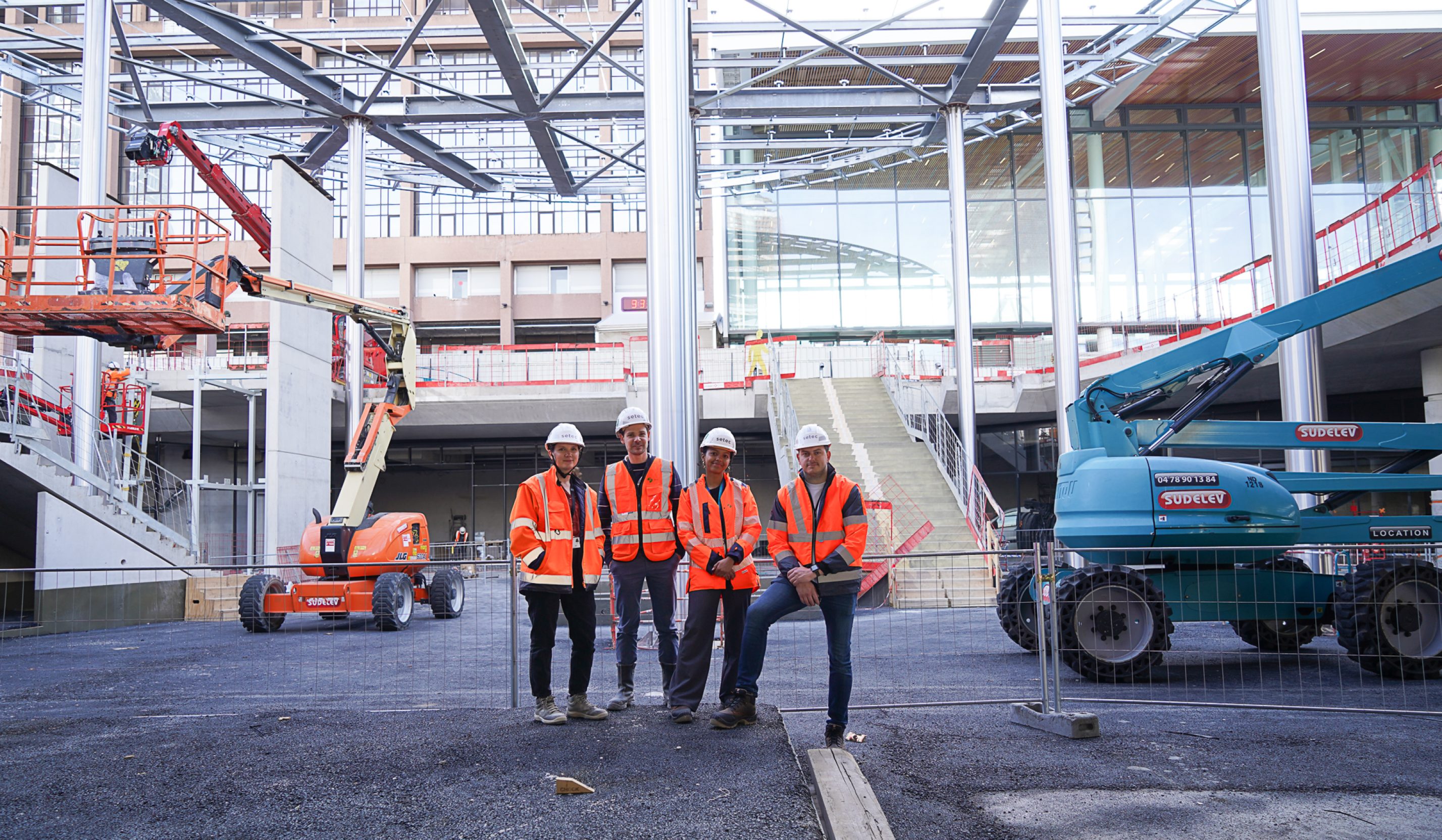
In parallel, setec opency was involved in the works on the Lower Plaza, a central space located at the foot of the station and a true nerve center of the Multimodal Exchange Hub. This large development, covering approximately 50,000 m², includes two major architectural structures—a monumental bicycle ramp and a canopy—as well as a 1,500-space bike facility, a taxi rank, and a large semi-covered pedestrian circulation area. Carried out over approximately one and a half years, between summer 2023 and the end of 2024, these works required close coordination between contractors, concessionaires, and other on-site operations, in a context of intense flows and constant co-activity.
The Upper Charles Béraudier Plaza
The former layouts were demolished to create a new pedestrian forecourt structured on two levels, incorporating a monumental canopy and a ramp facilitating access to the bike facility. The plaza was expanded to nearly 10,000 m², with a complete reorganization of pedestrian flows. Vehicular traffic was pushed back in favor of soft mobility. Planting, with more than fifty trees, enhanced greening and created cooling islands. These major works continued through 2025, delivering a space that is now more accessible, calmer, and more pleasant to use.
3. Inter-site OPC: coordinating a dense urban ecosystem
The overlap of public, private, and concessionaire worksites within a limited perimeter made structured inter-site coordination essential. On the Part-Dieu PEM, setec opency provided overall monitoring of operations, including the Lower Plaza parking facility, the Béraudier Gallery hall, the To Lyon building, the Béraudier and Lower Plaza developments, and concessionaire works.
The teams implemented a shared strategic schedule, synchronized access and circulation, and anticipated the needs of the various stakeholders. Regular milestone arbitration, proactive interface management, and consideration of mobility impacts ensured continuity of urban uses. This cross-cutting coordination secured interfaces between operations and contributed to the smooth progress of works in a context of high density and permanent co-activity.
4. Site facilities management: establishing production conditions for a complex urban project
For a project of the scale of the Part-Dieu PEM, SPL Part-Dieu chose to implement a shared site facility, known as the Bouchut site facilities, to address the lack of available space for multiple worksites. setec opency, together with setec ALS, contributed to drafting the specifications to meet workforce accommodation needs (100 to 120 workers), office capacity (around twenty offices), meeting rooms (two), and compliance with labor regulations. The facility also included a terrace overlooking Vivier Merle Boulevard, enabling teams to monitor site progress.
setec opency then managed these site facilities from 2018 to 2024. Management teams centralized shared costs and ensured clear prorated cost allocation among the companies using the facilities. setec opency monitored utilities consumption, waste removal, implemented site access control, ensured maintenance and upkeep, and optimized overall operations. Following the dismantling of the Bouchut site facilities to allow project completion, SPL Part-Dieu made a site available to contractors in the Mouton-Duvernet subdivision. setec opency has since supported them in setting up shared services such as waste removal, water and electricity consumption, maintenance of gates and fencing, and cost allocation among occupants.
Site facilities management proved to be a key lever for operational efficiency. In a constrained urban environment, these arrangements had to meet multiple needs while adapting to evolving construction phases and the coexistence of numerous stakeholders. This mission relied on close collaboration between technical and financial teams, ensuring responsiveness, cost transparency, and flexible management for the benefit of both the client and contractors. It helped create stable and efficient working conditions, essential to the success of a long-term urban construction project.
5. Lean Management: continuous improvement serving operational efficiency
On the Part-Dieu PEM, setec opency deployed a structured Lean approach rooted in continuous improvement and operational efficiency. By reducing waste and strengthening site organization, this approach improved cost control, enhanced production quality, and reduced lead times.
On the Vivier Merle Tunnel, implementation of the Last Planner System, micro-phasing, and 5S site walks helped optimize work sequences and secure execution conditions. At the inter-site level, dynamic master planning enabled synchronization of key operations and rapid identification of bottlenecks. Together, these tools fostered stronger collaboration between contractors and improved predictability of works progress.
setec opency’s commitment to the Lyon Part-Dieu PEM illustrates its ability to support large-scale urban projects over the long term, adapting methods and tools to the specific constraints of the territory. Over ten years, the company managed strategic underground infrastructure, supported the transformation of public spaces, coordinated multi-stakeholder worksites, deployed a structuring Lean approach, and ensured rigorous management of logistical and financial systems.
This consolidated expertise demonstrates setec opency’s capacity to support project owners on complex urban developments and to mobilize this know-how for future ambitious projects, in France and internationally. Beyond technical performance, this project was above all a major human adventure. We warmly thank all our partners and clients who contributed to its success, as well as all our colleagues for their expertise, commitment, and dedication in service of this landmark project.
Key Figures
Crédits photos : © setec opency
Plus d’information sur le projet d’aménagement du quartier de la Part-Dieu à Lyon : https://www.lyon-partdieu.com/