en
For a long time, the building site was seen as a liminal space.
A transitional phase – necessary but uncomfortable – situated somewhere between the architectural vision and the finished building. A period one simply endured, rather than one that was given thought. Yet, in urban contexts, this view is no longer tenable.
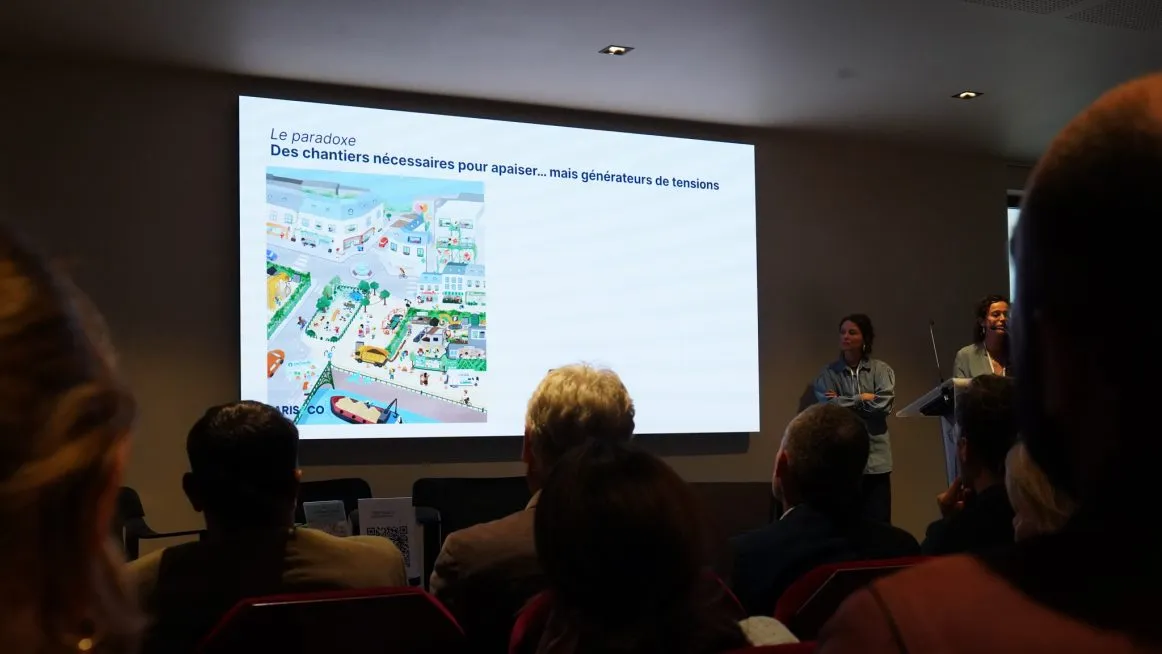
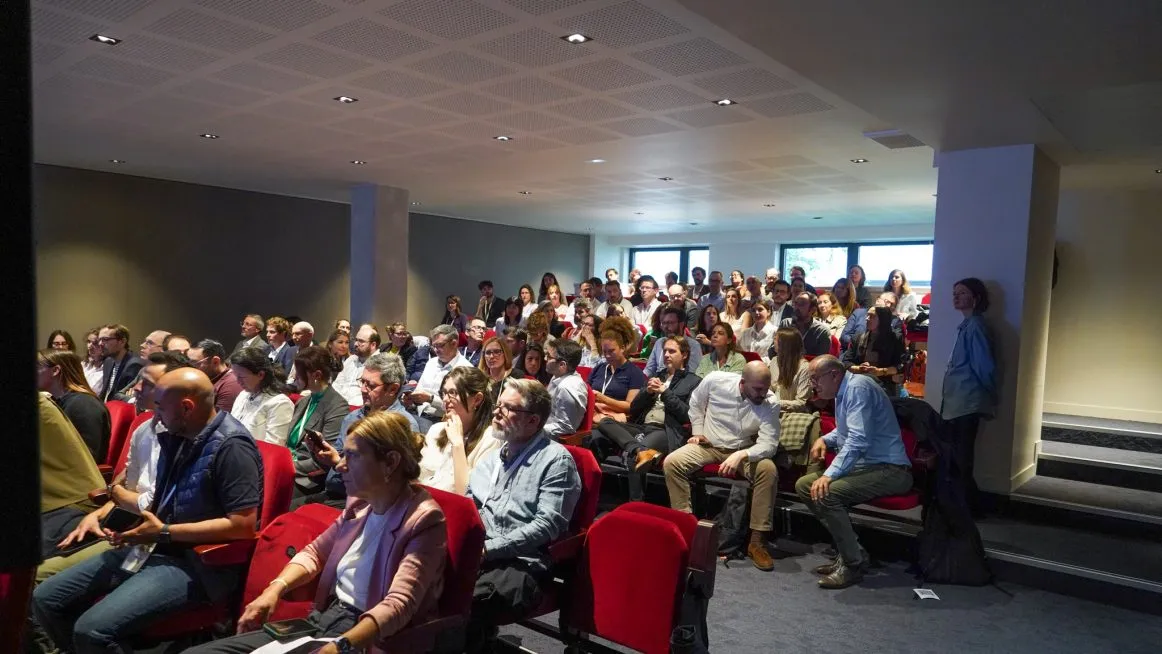
It was this clear-eyed and widely shared realisation that brought together, on Thursday 11 June at the Distillerie de Saint-Ouen (Eiffage), the members of the ‘Sustainable and Peaceful Construction Sites’ working group, led by Paris&Co. This meeting marked the culmination of several months of collective work, culminating in the official launch of a best-practice guide designed to bring about tangible change in the way urban construction sites are designed and managed, as well as the signing of a joint commitment manifesto calling on the entire sector to make sustainable changes to its practices.
On this occasion, setec reaffirmed a firm conviction: the construction site now plays a central role in how we design and transform the city. A moment at which quality of life, the social acceptability of projects and the genuine credibility of environmental commitments now come to the fore. A moment that can no longer be viewed as a mere technical interlude, but as a project in its own right, to be designed with rigour, responsibility and method.
This report is accompanied by the publication of the guide ‘Sustainable and Calm Construction Sites – Solutions and Lessons Learnt to Transform Urban Construction Sites’, designed as a practical tool for all those involved in the construction sector. A guide available to download to help move from intention to action, and to ensure that construction sites play a lasting role at the heart of urban transition.
The construction site: where urban projects are put to the test
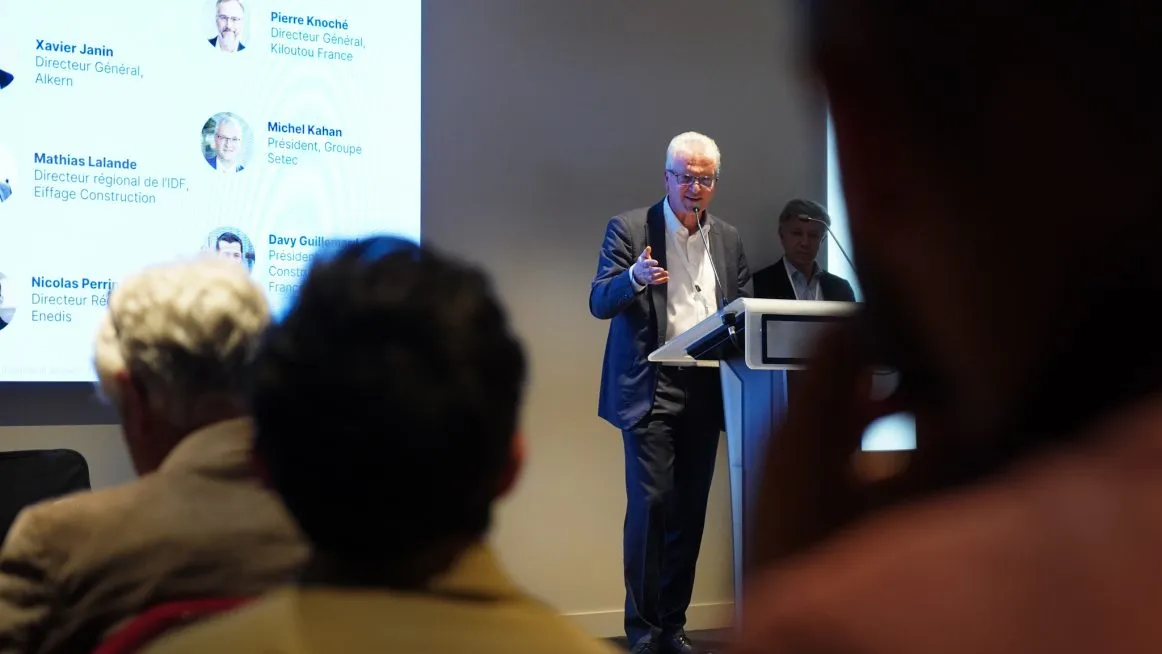
In his speech, Michel Kahan, Chairman of the setec Group, emphasised how the construction site is now the moment when the project meets the local area. It is where intentions come up against actual uses, where engineering becomes visible, and where urban transformation takes shape — sometimes amid tension.
Building, renovating and transforming the city are essential. But this transformation can no longer take place at the cost of inconvenience to residents, however temporary. Noise, pollution, disruption to transport, and a lack of understanding from local residents: these irritants are no longer acceptable as mere collateral damage.
Faced with this reality, the construction site can no longer be viewed as a secondary phase. It must become a design consideration in its own right, planned for from the outset, on a par with the structure itself.
For Michel Kahan, a smooth-running construction site cannot be improvised. It cannot be rectified at short notice once work has begun. It requires preparation well in advance: in the phasing of works, the organisation of traffic flows, the anticipation of interfaces, and taking into account the uses of the area from the very first sketches. Making the construction site clear, understandable and well-managed also makes the project more acceptable.
This requirement is environmental, social and operational in nature. For a better-designed construction site is, very often, a more efficient, better-coordinated site that is more resilient to unforeseen events. It requires breaking down silos, aligning stakeholders and collectively raising standards.
Thinking about CSR before the ground-breaking ceremony
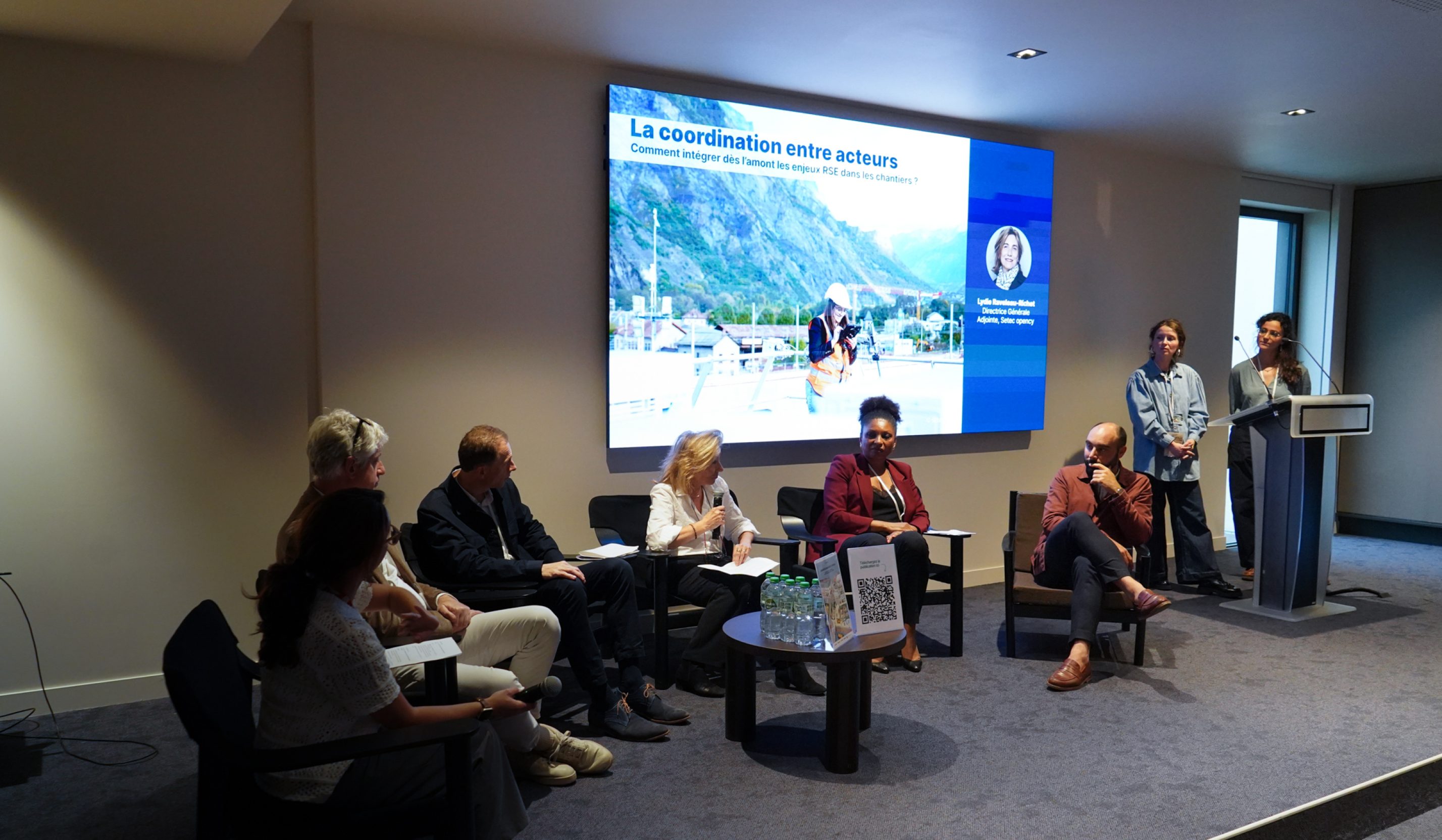
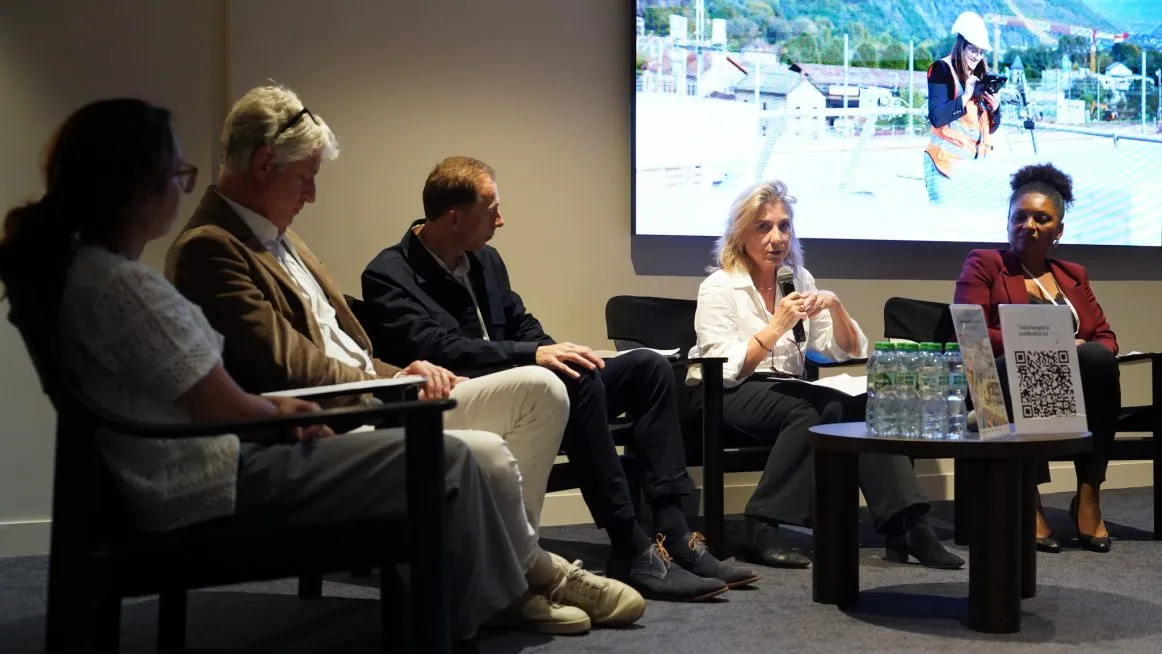
This vision is naturally echoed in the remarks by Lydie Raveleau-Richet, Deputy Managing Director of setec opency, who set out a clear principle: the success of a CSR initiative is not determined solely on site. It is built well before work begins.
The key issues are now well established: minimising disruption, preventing pollution, social acceptability, safety, working conditions and the coordination of an ever-increasing number of stakeholders. Yet, despite this awareness, practices often remain incomplete.
Three weaknesses persist. Firstly, at the planning stage, when CSR ambitions remain confined to intentions, without clear operational implementation, a dedicated budget or structured governance. Secondly, during the works, when teams, preoccupied with deadlines and production targets, lack clear, day-to-day guidance on CSR issues.
Finally, after the project, when feedback remains too scarce to fuel sustainable collective progress.
CSR Project Management Support: turning ambition into operational reality
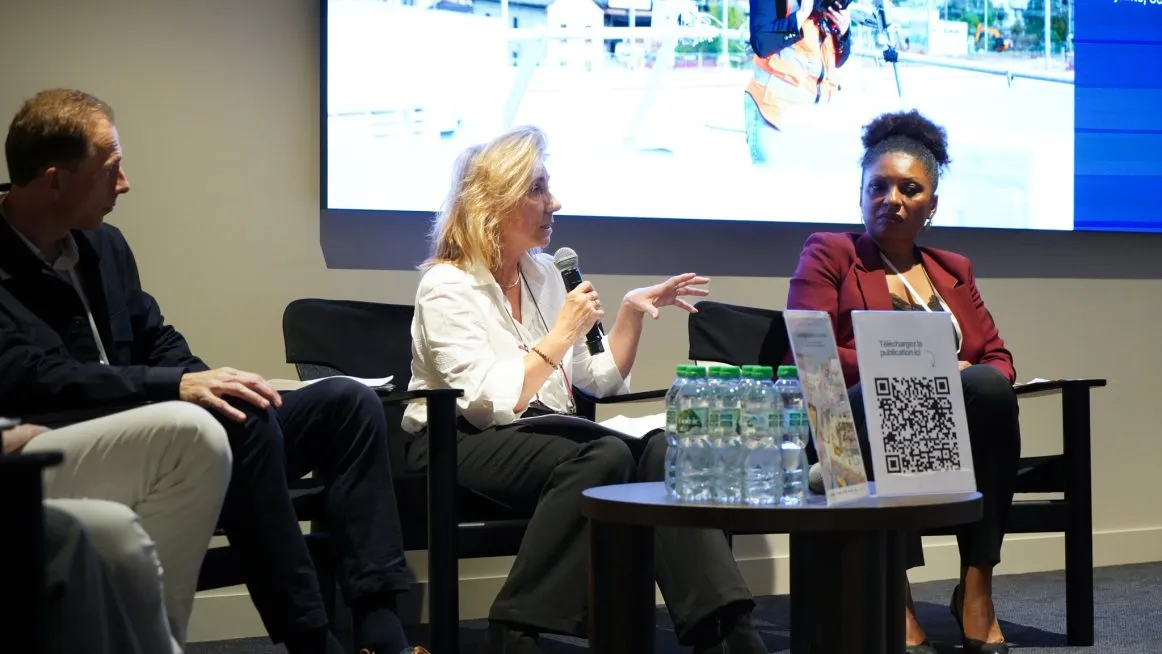
It is to address these shortcomings that setec opency has developed a CSR Project Management Support service dedicated to construction projects. This service is designed to provide cross-functional support, capable of linking strategy, design and implementation.
From the very outset, the teams support project owners in developing a truly operational CSR strategy: integrating requirements into contract documents, organising consultation processes, planning logistics in advance, and clarifying roles and responsibilities. The aim is simple: to prevent CSR issues from becoming everyone’s responsibility — and ultimately no one’s.
On the ground, the key challenge is continuity. Continuity between the commitments made and their practical implementation. Shared visual management, tools derived from lean management, the role of a CSR liaison officer, monitoring of indicators, and team training: CSR project management support makes it possible for all site stakeholders to see, understand and manage the objectives.
The examples presented at the event illustrate this clearly.
In Lyon, on the AXA Lafayette project, the integration of an ambitious target for the reuse of materials relied on detailed traceability, rigorous organisation of storage areas and close coordination between contractors.
On the Lyon–Turin tunnel (TELT) project, the roll-out of the SAVE tool now makes it possible to precisely manage energy consumption at site accommodation facilities using real-time data.
A collective commitment to driving change in the sector
The ‘Sustainable and Calm Construction Sites’ working group is part of a resolutely collective initiative. Led by Paris&Co, it brings together construction firms, manufacturers, operators, engineering firms and public sector bodies around a common goal: to bring about sustainable change in urban construction practices.
The signing of the manifesto at the event on 11 June marks a pivotal milestone. It commits the management teams of partner organisations, including setec, to rolling out these best practices on a larger scale, beyond pilot projects, to make construction sites a genuine driver of urban transition.
For the setec group, this commitment is fully in line with its raison d’être. Being ‘Engineers and Citizens’ means not only designing high-performance structures, but also taking responsibility for the duration of the works, whilst respecting the local areas, residents and those who work there.
Because building the city of tomorrow is no longer just about delivering projects. It is now about controlling the way in which they are built.
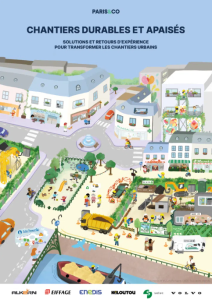
Sustainable and peaceful building sites: solutions and lessons learnt to transform urban building sites: https://www.parisandco.com/publications/chantiers-durables-apaises/
What role do we give to people on our building sites? : https://opency.setec.fr/quelle-place-donnons-nous-a-lhumain-sur-nos-chantiers/