en
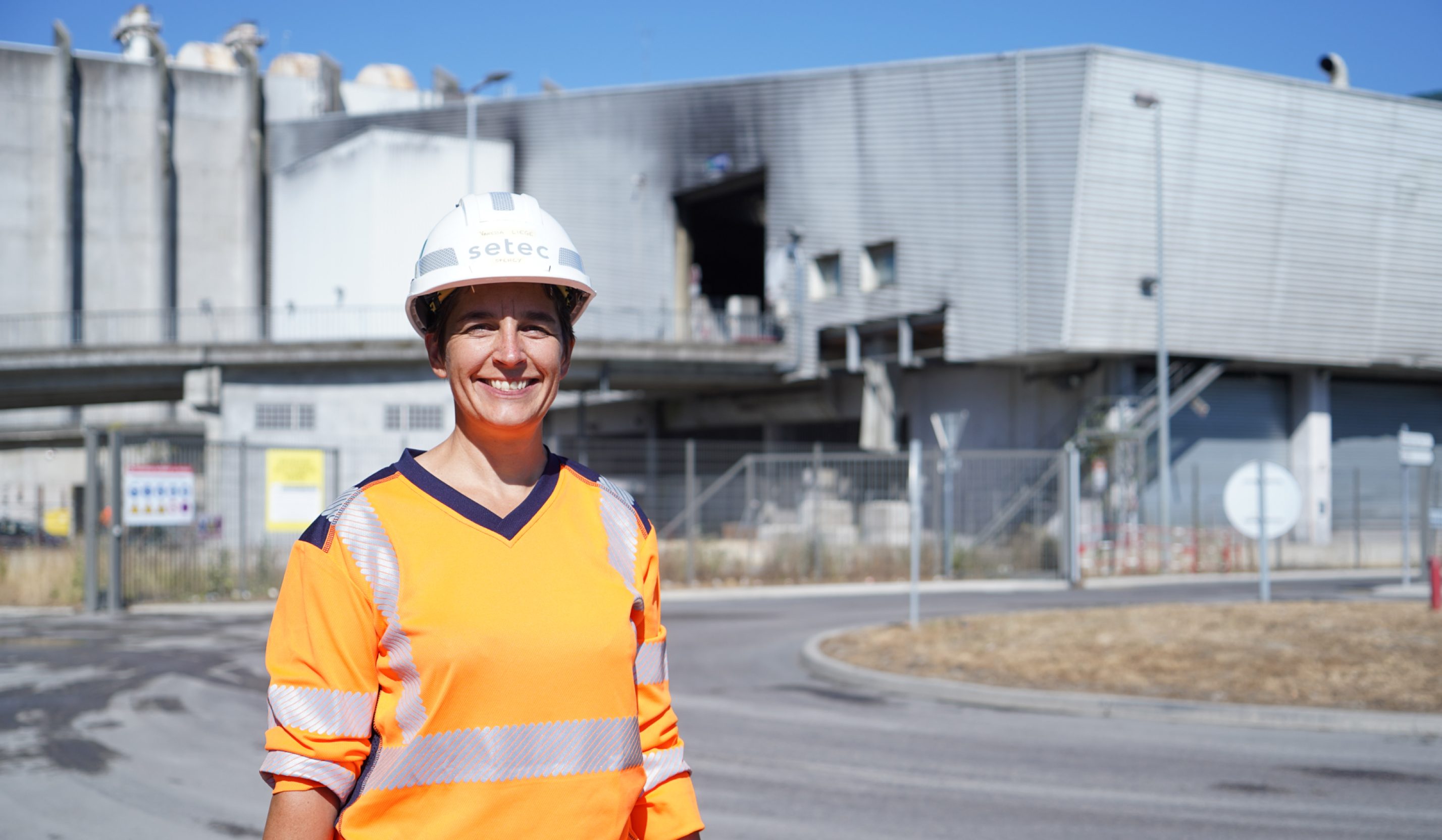
In La Tronche, at the Athanor site, Grenoble-Alpes Métropole and six neighbouring local authorities are building a new Waste Incineration and Energy Recovery Plant (UIVE) designed to modernise waste treatment in southern Isère. Acting as the Project Management Consultant (OPC), setec opency is supporting this landmark project, with a key focus on organising the construction schedule, coordinating interfaces and ensuring the smooth running of the major phases of a complex industrial operation, within the constraints of the site.
New equipment to modernise energy recovery from waste
Athanor’s future UIVE forms part of a regional cooperation initiative led by Grenoble-Alpes Métropole and six neighbouring local authorities in southern Isère. Together, these local authorities represent nearly 740,000 residents and 259 municipalities, all committed to modernising their industrial waste treatment and recovery facilities.
The project aims to replace the current incinerator, which came into service in 1972 and has now reached the end of its service life, with a more compact and efficient facility. The new facility will be designed to process 165,000 tonnes of waste per year, compared with 185,000 tonnes for the existing plant, in order to accommodate the expected reduction in waste for incineration and meet residual waste reduction targets.
A waste-to-energy plant (UIVE) enables the incineration of waste that is neither recyclable nor compostable, thereby preventing it from being landfilled. The heat produced by combustion is recovered to supply district heating networks and generate electricity. Athanor’s new incinerator will thus produce 340 GWh of thermal energy supplied annually to district heating networks, equivalent to 38,000 standard homes, as well as a projected 76 GWh of electricity, 25 per cent of which will be consumed on-site.
A regional, industrial and environmental project
Beyond its role in waste treatment, ATHANOR is a project aimed at transforming the local area. Located on an existing site in La Tronche, at the entrance to the town and along the banks of the River Isère, the future facility must blend into a sensitive urban, industrial and landscape environment.
The project also meets new regulatory requirements, particularly regarding air quality and the reduction of waste incinerated. Grenoble-Alpes Métropole states that at least 35 per cent of the future site’s area will be covered with vegetation and that it will be capable of infiltrating 100 per cent of rainwater. Odour control and noise reduction systems are also planned to minimise disruption to the immediate surroundings.
Ensuring the continuity of public services is another major challenge. The new incinerator will be built on the same site as the existing facilities, in order to ensure the continuity of waste treatment and recovery whilst the site is being transformed.
A complex construction project in a constrained location
The complexity of ATHANOR stems as much from its industrial scale as from its location. The construction of the new UIVE is taking place on a site already occupied by waste treatment facilities, with significant constraints relating to operations, access, phasing and co-operation.
The works involve, in particular, preparatory work to clear the site (demolition of structures, diversion of utility networks, installation of temporary facilities, …), the construction of the new treatment unit with combined heat and power (earthworks, deep foundations, structural work, installation of process equipment, …), the demolition of the old UIVE, the construction of a new office building and the development of the surrounding areas.
The contract for civil engineering and building works across all trades, excluding process equipment, was awarded in early 2026, with work due to commence on 27 March 2026 and an estimated duration of 62 months. This development confirms that the project has entered a major operational phase, during which the management of work sequences, interfaces and milestones becomes crucial.
Setec Opency’s mission: to organise time and coordinate interfaces
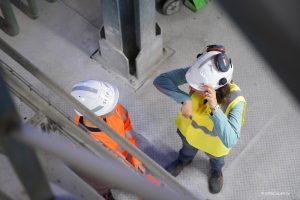
On the ATHANOR project, setec opency is carrying out a scheduling, supervision and coordination (OPC) role, with a key responsibility: to structure the construction phases, coordinate the various parties involved and clarify the interfaces between the different aspects of the project. setec opency specialises in schedule control, responsible site management and project management; for over 50 years, the company has been carrying out OPC assignments on complex building and infrastructure projects.
In an industrial project such as ATHANOR, the project management role goes beyond simply producing a schedule. It involves linking time, space, operational constraints and the work of the various trades to ensure that each construction phase fits into an overall plan.
This approach is particularly important on a site that is already in operation, where technical constraints are combined with the need to maintain service continuity. The interfaces between industrial processes, building works, utility networks and existing operations must be anticipated, coordinated and managed throughout the project.
4D phasing: a tool for clarity and foresight
To manage this complexity, setec opency utilises 4D phasing. This approach involves linking the project schedule to the digital model, in order to visualise the progress of the construction site over time and gain a better understanding of the sequence of works.
On the ATHANOR project, 4D phasing during the design phase made it possible to visualise the major construction stages, the site footprints, access points, storage areas, interfaces between structures and the constraints associated with the gradual integration of industrial equipment. It thus helped to establish a common framework for understanding amongst the project stakeholders.
Securing the interfaces between the building, the process and operations
One of the major challenges facing ATHANOR lies in coordinating the interfaces between the building and the industrial process. Due to their size, weight and technical complexity, process equipment requires specific integration sequences. Certain components must be installed before the building is fully enclosed, which necessitates meticulous coordination between structural works, steelwork, industrial equipment, utility networks and site access.
In this context, the Project Management Organisation (OPC) acts as an operational coordinator: it helps to prioritise milestones, clarify dependencies, anticipate bottlenecks and facilitate collective decision-making. Phasing thus becomes as much a management tool as it is a means of dialogue.
Expertise supporting complex industrial projects
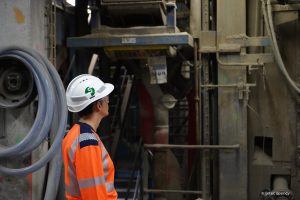
ATHANOR demonstrates the added value that setec opency brings to high-stakes industrial projects: managing deadlines, coordinating numerous interfaces and ensuring the construction site is transparent to all stakeholders. This approach is fully in line with setec opency’s areas of expertise, as the company supports the design of complex projects by drawing up task schedules, planning studies and works, identifying technical interfaces and rigorously monitoring progress.
In a project such as ATHANOR, success does not rest solely on the technical performance of the final equipment. It also depends on the collective ability to organise the construction site over the long term, to maintain consistency between different phases of work, and to anticipate constraints before they become bottlenecks.
This is the very essence of time management: transforming a complex operation into a controlled, comprehensible and manageable process.